Review: Cyberpunk 2077: Chrome #1
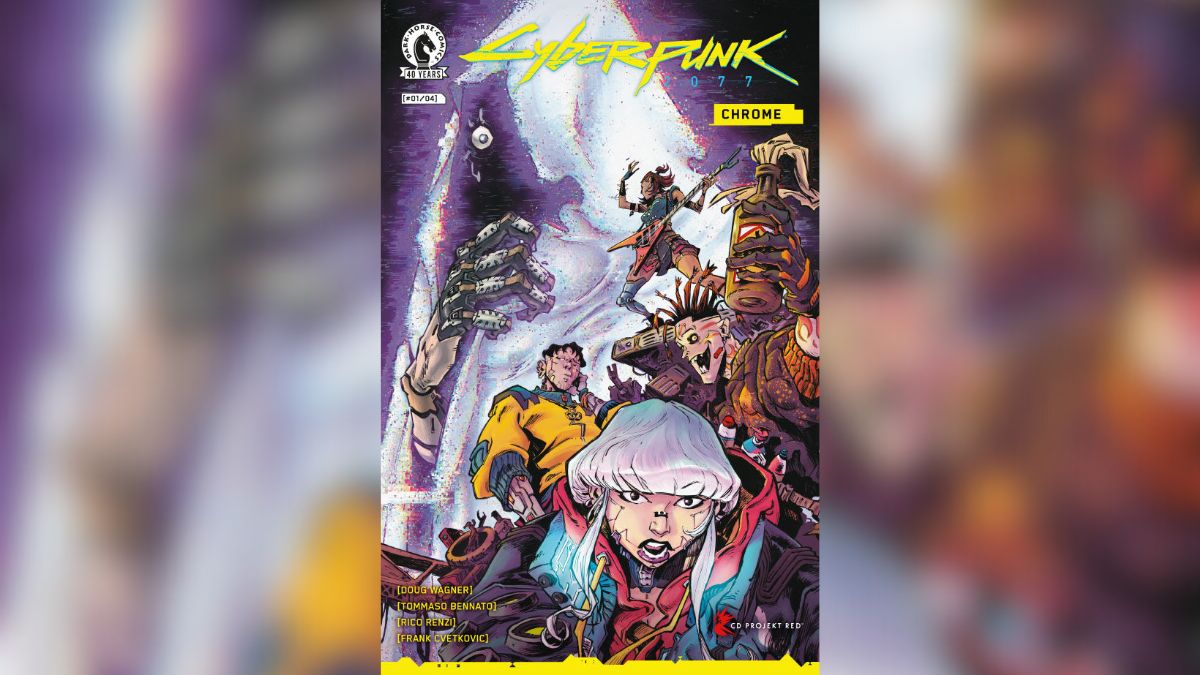
Night City does not reward attention, it punishes it. Here’s our review of Cyberpunk 2077: Chrome #1, written by Doug Wagner with art by Tommaso Bennato, colours by Rico Renzi, and letters from Frank Cvetkovic.
There is a confidence to Cyberpunk 2077: Chrome #1 that becomes apparent almost immediately. This is a book that knows exactly what kind of story it wants to tell, and more importantly, how long it wants you to sit with its characters before it reminds you how disposable they are.
The cover itself sets the tone perfectly. Rough, wavy linework frames the cast against a looming threat, classic Cyberpunk iconography rendered in a way that feels unstable rather than sleek. It promises danger, not glamour. Inside, that promise is kept. The credits page leans into genre tradition with sharp yellow on black, clean and purposeful. It is a small touch, but one that reinforces how controlled the presentation is, even when the story itself is about chaos.
By the time the book reaches its early interior pages, the tone is unmistakable. Violence arrives fast and without ceremony. An arm is sawed off. The message is clear: this is a dark world, and bodies are currency. Bennato’s page layouts feel dense and claustrophobic, overlapping panels stacked tightly together with very little breathing room. The effect is almost musical, like the driving rhythm of a rock song that never quite lets you pause.
That rhythm becomes thematically resonant once the cast dynamic begins to take shape. The early stretch of the issue spends a significant amount of time grounding the group. They tease each other, irritate one another, and look out for each other in ways that feel unforced and recognisably human. Conversations flow naturally, handling worldbuilding through dialogue rather than exposition. Dreams of music, races, and a haunted scrapyard are introduced casually, but they do real narrative work.
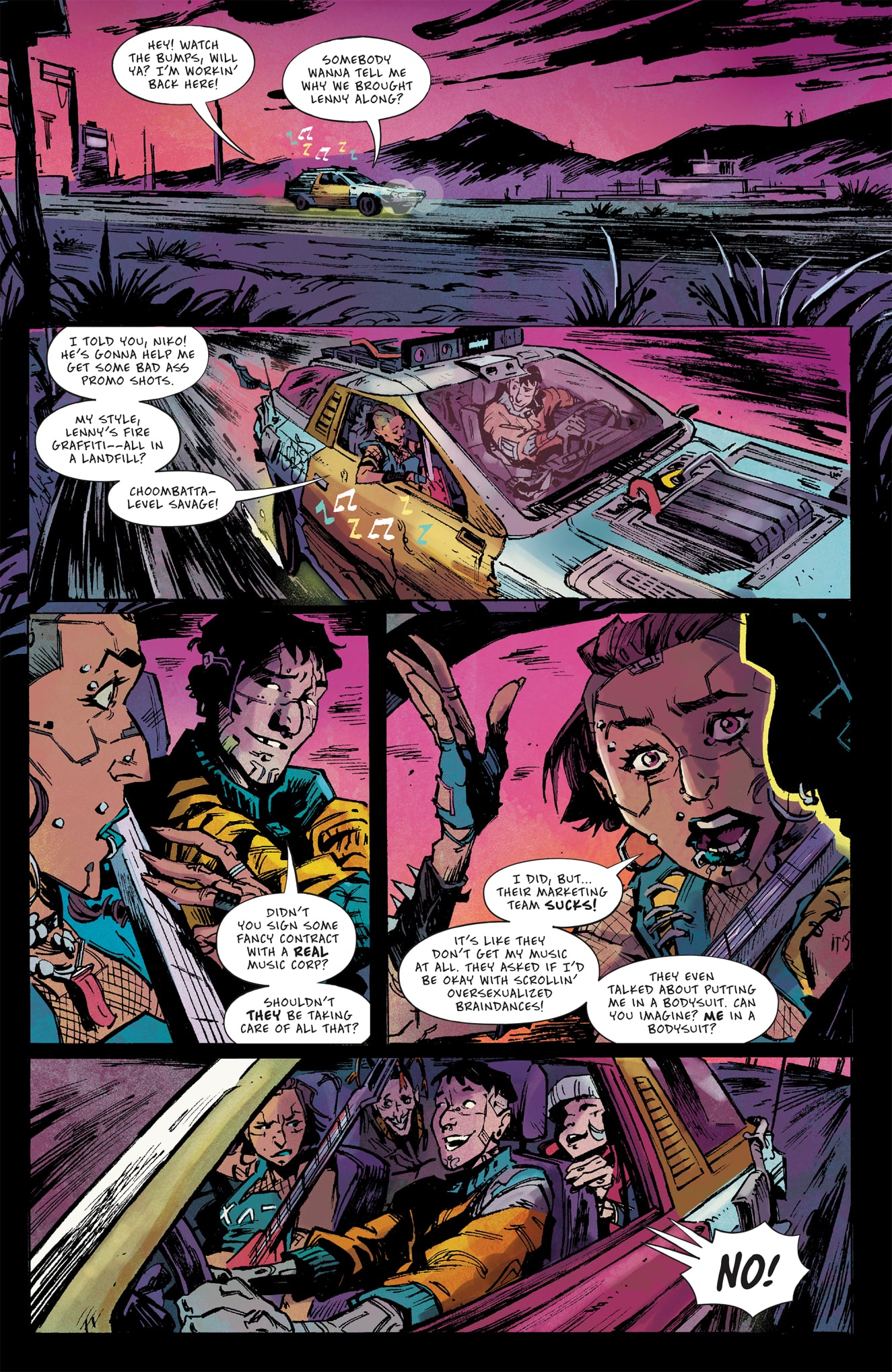
There is a point where this setup runs long enough that you begin to expect a rupture. The book signals that something is coming, and while that anticipation could have become a problem, it ultimately strengthens what follows because of how well the reveal is handled.
When the horror lands, it does so with shocking finality. A key character’s loss arrives suddenly, brutally, and without narrative cushioning. The art does not soften the blow. A moment of joy is ended in a single panel, tears frozen mid-expression. Even knowing the book is marketed as horror, the impact is severe. It works precisely because the loss feels unfair, which is exactly the point. Night City does not care how alive you feel moments earlier.
What follows is not heroism, but panic. The surviving characters react the way people actually would. They run. They scramble. They make desperate decisions. When a better-armed group enters the scene, the tonal shift is intentionally jarring. These are not saviours. They are simply another threat, defined by a different kind of power. Their willingness to use a teenager as bait crystallises the moral reality of this world more effectively than any speech could.
Throughout, colour work and lettering quietly reinforce the tension. Renzi’s colours heighten mood rather than spectacle, while Cvetkovic’s lettering stays clean and readable even as the chaos escalates, allowing the emotional weight of the scenes to land without distraction.
By the end of the issue, very little is resolved. That restraint is one of Chrome’s greatest strengths. Instead of answers, the book leaves us with damaged people, fractured trust, and the clear understanding that survival is not guaranteed. What compels you to continue is not mystery or lore, but the characters themselves. Cyberpunk 2077: Chrome #1 is a strong opening issue that understands the franchise at its most effective. It is not about power, but vulnerability. Not about heroes, but people who briefly believed they were safe. It is a brutal, confident start that earns both excitement for what comes next and respect for how deliberately it gets there.