Movie Review: Leviticus
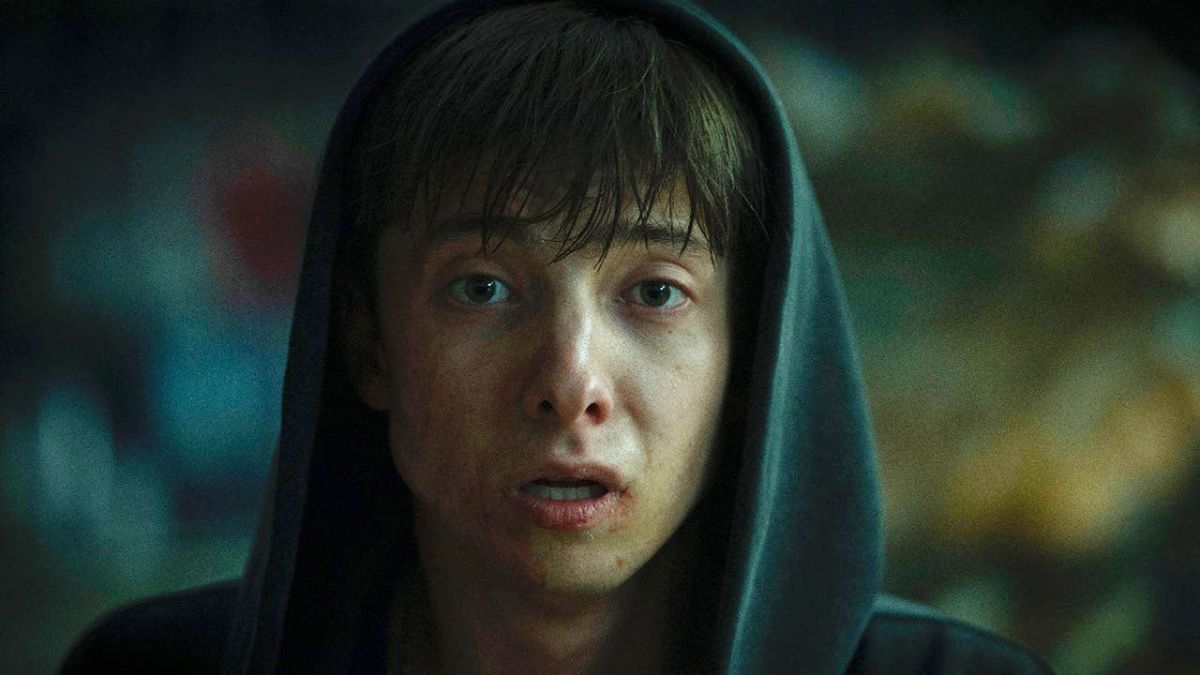
Two weeks ago, I had the amazing opportunity to watch Leviticus at an early screening in my city. And it’s taken a lot of time to truly reconcile with my opinion on the film.
Leviticus, created by Adrian Chiarella, follows two teenage boys as they run from a violent entity of hate and shame that takes the form of the person they most desire after being outed to their devout, isolated town. In his feature debut, Chiarella draws on his personal experience of growing up queer in rural Australia amid the conditional love of his religious upbringing. He strongly believed that queerness could access horror in unique and relatable ways that still accurately portray realistic experiences and plays with dread and desire with a physical representation of internalised and socially enforced homophobia.
Leviticus opened at the box office with $2.6 million in its first weekend and is currently at just over $5.4 million worldwide, although it has yet to be released in the UK and Europe. On IMDb, it currently sits at a 6.8/10 and has settled at 3.8 on Letterboxd. For a moment, Rotten Tomatoes gave it a critic score higher than Obsession (2026), and it has since appropriately dropped to 92%, with an audience score of 82%. Obsession remains at 94% on the Tomatometer and Popcornmeter.
Leviticus is a wonderful story that balances romance and terror, but I wouldn’t really call this a horror movie. Most of the feedback I’ve heard is that horror fans were disappointed, and I found that it shares more elements of the Australian Gothic genre, such as an uncanny presence and forced assimilation. It directly discusses themes of homophobia rather than trusting the film’s supernatural elements to symbolise it. The movie would have really benefited from a few more jump scare moments between Naim (Joe Bird) and the entity, and Leviticus certainly had the opportunity. The total run time of the film was only 88 minutes, less than an hour and a half; the film could easily have been drawn out for a further 40 minutes. Whether it was a problem with funding, coverage, or executive decisions in the final edit, the film suffered because it didn’t reach its full potential. Just a little more play with tension and suspense would have elevated this film in its horror genre.
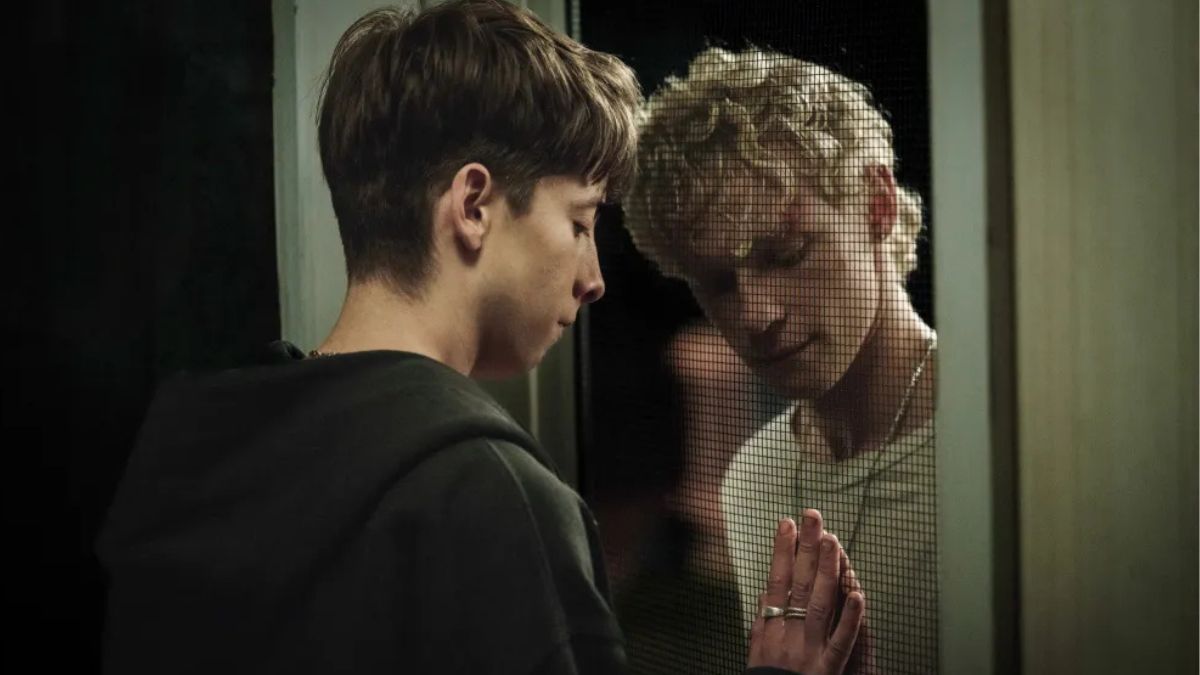
Moreover, they most definitely could have added more padding to Naim and Ryan’s (Stacy Clausen) relationship to establish what they were to each other. It almost felt like all the scenes from the trailer were the only scenes in the film, and we didn’t get to see who they were without the physical manifestation of homophobia. Ryan is a very interesting character, and Clausen shines in this breakthrough role, but his perspective was nearly non-existent, especially given how heavily he was marketed as a main character. But honestly, I really liked that this story was only through Naim and focused on his relationship with his queerness. Bird shows his range in a role opposite to his debut in Talk to Me (2022). Clausen is set to star in The Last Druid, releasing late September later this year.
The film reached its audience; it is doing hits on Tumblr and Archive of Our Own, a popular fanfiction website. Die-hard horror fans recognise Chiarella’s intention, already familiar with the intertwining of queerness and the horror genre, as explored famously in I Saw the TV Glow (2024), Rift (2017), and Eerie (2018). This subgenre is growing in popularity as independent films become more accessible and queer filmmakers can tell more honest stories. And as horror becomes more mainstream, especially this year with Obsession and Backrooms (2026) highlighting the genre, we can hope that Leviticus introduces the subgenre and the importance of queer stories in this space to general audiences, and general audiences learn to prioritise them.
This movie had its ups and downs, but it is ultimately a brilliant story. Homophobia exists dangerously across the world, and unfortunately, it represents a time-old tale relatable to such a large audience. As a queer Australian myself, it felt almost made for me and my friends and opened up so much conversation. I’m excited for the spotlight this film puts on Australia. I hope other Australian films will be able to follow Leviticus’ footsteps and receive the same level of hype, anticipation, and love worldwide. It’s quickly becoming an all-time favourite in my household, and I’ve already got tickets to watch it again this weekend!
Leviticus is still in theatres; make sure to catch it before it leaves!