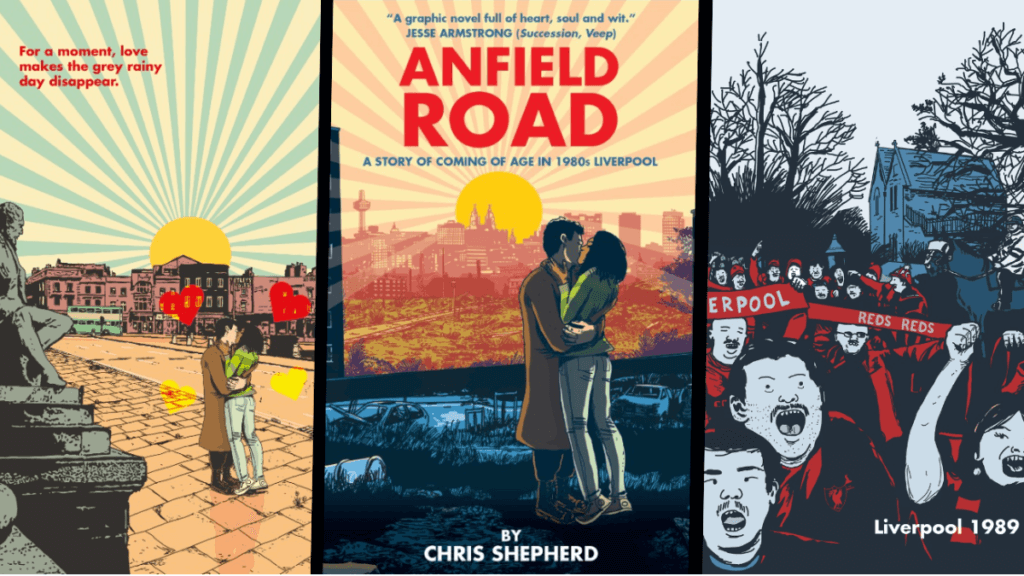
Founded by Hilina Da Costa Gomez, Scatterhead Comics is an attempt to build a platform she wished existed, one that lowers the barrier to discovery and makes indie comics easier to find, regardless of where they’re made.
How does Scatterhead Comics plan to make moves in today’s industry? We explore a little of everything with founder Hilina in this big Q&A. Check it out down below.
Origins & Personal Journey
You’ve mentioned that Scatterhead grew out of your own experience as a comic creator. What frustrations or gaps were you running into that ultimately led you to start building your own platform?
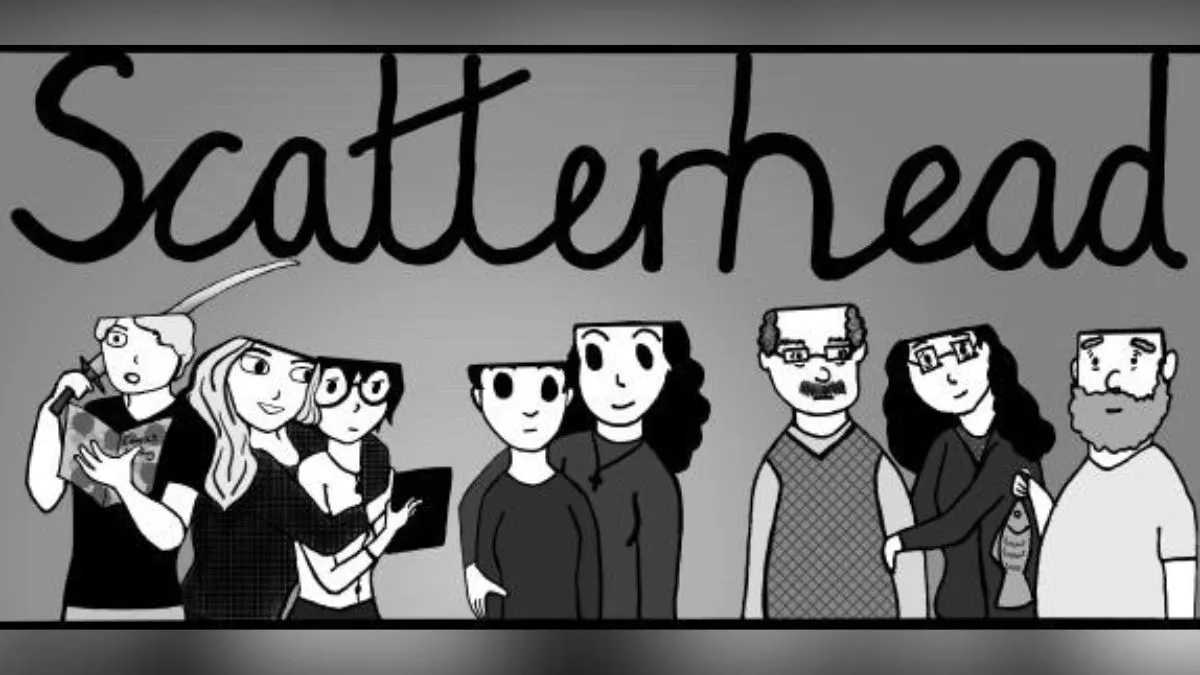
So the original “Scatterhead” was actually a webcomic series I started making and posting on different comic platforms and social media when I was about 18/19. My art skills weren’t the best, so ultimately that version of Scatterhead never really went anywhere. But that was when I first started thinking about comics from the creation and promotion perspective. Back then my biggest frustration was visibility, and how difficult it was to promote your comic, especially when you’re young, don’t know much about marketing, and don’t really have a lot of money. I’m sure that’s a frustration shared by many up-and-coming creators. With Scatterhead, I want to build something I would have liked to use at the time, a platform that helps make visibility and promotion a bit easier for indie creators and their work more accessible to readers.
How did those early gag comics and the original Scatterhead concept shape the philosophy of what the platform has become today?
A lot of the playfulness I try to bring to the Scatterhead platform comes from the same playful tone and design my comic had. The Scatterhead comic was a bit autobiographical. I called it Scatterhead because I was kind of poking fun at some of my own little scatterbrained or airheaded moments. In terms of platform activities, wanting to make an app that will promote a wide range of undiscovered or up-and-coming comics definitely comes from a place of wanting creators I like and admire to have the type of visibility I had hoped to get back when I was drawing my comic.
Why Scatterhead Exists
When you look at the current digital comics landscape, what do you feel is most often missing for indie creators?
One of the biggest issues with indie comics, both digital and print in my opinion, is how fragmented the different comic communities or industries are by country, region, or language. As a reader, it makes it easy to miss really good indie comics if you don’t know all the places to find them. Typically, I think when people find a handful of stores or platforms they like, they tend to stick with them. Since indie comics are so fragmented, you have plenty of readers who’ll never hear about really good works because they just aren’t promoted in the areas or platforms these readers explore. I think what’s missing is a big concerted push to make indie comics as a whole more accessible. A push to build a strong point of entry or discovery platform dedicated to indie comics across regions. Something kind of like what Bandcamp does for indie music.
Scatterhead puts a lot of emphasis on underserved regions and smaller publishers. Why was that focus important from the outset?
It felt important to focus on underserved regions because they’re the ones most affected by how fragmented the indie space is. I’m from the Netherlands, but I used to live in the US. What stood out to me in the US was how much stronger the indie comics culture felt. It was still niche, but within that niche there was a dedicated readership that really helped push some indie creators and smaller publishers to international acclaim. Europe has incredible talent. Franco-Belgian comics are especially popular, but publishing and readership throughout the continent is much more fragmented than in the US, and that’s to be expected.
We have different languages, different cultures, and different publishing systems. But the result is that creators who can’t access bigger European publishers don’t get much help or widespread recognition. I think having a shared, multi-language space, like what Scatterhead is trying to be, could bring together various European creators, small publishers, and readers from regions you might not yet associate with comics to make works more accessible across borders. I’m happy to say that as the project has grown, people from outside of Europe have started joining Scatterhead as well. That’s what really made me think Scatterhead could be a major hub and discovery point for indie comics worldwide. Even at our early prototype stage, we already have creators from the Netherlands, Spain, Romania, the UK, Serbia, France, India, and Mexico.
Building Slowly, On Purpose

Scatterhead is still in prototype and closed testing. Why was it important to build the platform first with creators, rather than launching publicly and adjusting later?
This was more of a pragmatic move on my part. I’m not a corporation or a big publisher. When I first started Scatterhead, I was just a recent graduate with an idea, so I couldn’t really afford to just make something and hope people use it. So I started reaching out to creators here in the Netherlands to see if there was actually any interest in the idea. When I realized that there was, I felt more confident hunkering down and making it happen.
As Scatterhead’s grown, we still involve creators in the process and try to get their feedback as much as possible because ultimately they’re the ones who’ll be uploading their work onto the platform, so we want to make sure they feel the platform provides good value for them. Soon we’ll be doing reader testing for the same reason, to make sure we build something people will actually want to use.
How has early feedback from testers already influenced how the platform is evolving?
Our first phase of testing was to ensure creators could actually upload content without any bugs or crashes. Throughout this process, we’ve been able to learn what buttons or actions were glitchy and what made the app crash. Users send us bug reports over Discord, and this helps us ensure the functional side of the app is being improved. We also get more creator-experience-related feedback, things like thoughts on the upload process and suggestions like which additional genre or tag options to add. It’s this kind of feedback that helps us make something people feel is easy and intuitive to use.
Creators, Ownership & Sustainability
The 70/30 revenue split and non-exclusive publishing model are very clear commitments. What values guided those decisions?
I always liked the idea of a 70/30 revenue split because it felt like a fair and straightforward structure for this kind of platform. Ultimately, the platform exists because of the creators’ works, so it makes sense that the majority of revenue goes to creators. Since we share the total revenue, this kind of structure also means the company only succeeds if creators do. It puts us in a position where we’re always working to promote both the platform and the creators on it, because our growth is directly tied to theirs.
When it comes to exclusivity, I don’t think that makes too much sense for this kind of platform, especially at this stage. Scatterhead isn’t meant to replace traditional publishers, so if a creator gets the opportunity to work with a big publisher or distributor, we’re not here to deny that opportunity.
How do you think about fairness in a readership-based revenue pool, especially for emerging or niche creators?
With any platform, you have the risk of popular contributors getting even more popular and potentially eclipsing new talents, especially ones that haven’t had the chance to build a strong following yet. One workaround I thought we could try once we launch is to do creator spotlights, both on the app itself and on social media. Each week, we could have an editorial list where we highlight comics that are new or undiscovered, give readers an idea of what they’re about, why we liked them, and give the comics some boosted visibility for a bit to build a readership. Then the next week or so, we do the same for another bunch of comics.
Why was retaining full creator ownership a non-negotiable part of Scatterhead?
I think it just makes sense that creators own the work they make. It’s their time, their effort. Scatterhead is just hosting the work, we’re not making it, so I don’t think it makes sense to expect any ownership over it. When creators upload their work, they agree to let us host it under our stated terms, which for now are for developing the platform and later will be for commercial use under the 70/30% revenue split.
Curation & Creative Freedom

Scatterhead describes itself as curated. What does that mean in practice, and how do you balance quality, safety, and creative freedom?
By curated, we mean new comics on the platform are reviewed by the team for both readability and harmful content. If image quality or readability is the issue, we’ll most likely reach out to the creators as much as possible and say, “hey, it’s really hard to read this lettering or we really can’t make out what’s happening in this panel,” and give them a chance to resubmit. What we don’t want to accept is any content that’s hateful, harmful, gratuitous, or AI-generated. So we don’t accept things like blatantly racist content, comics that explicitly call for harm against real people, comics that are just hardcore or abuse porn, or really gruesome violence for the sake of violence.
We do accept comics that have erotic scenes and violence in them as part of the larger story, as long as the age restriction is labeled correctly. Beyond those boundaries, creators have a lot of freedom. We aren’t trying to police style, genre, or subject matter. If we do reject a submission, we try to explain why because it’s important that creators know their work is being taken seriously.
What kinds of stories or creators do you hope will feel most at home on Scatterhead?
I want everyone in the indie space to feel like their work can be appreciated and find a following on Scatterhead. The indie comics ecosystem is already so fragmented, and the goal of Scatterhead is to make it less so. So I hope creators feel it doesn’t matter what language or style their comic is in. If someone has an interesting story and or interesting artwork, the goal for Scatterhead is to be a place where they feel comfortable uploading the work and confident that it will be accessible to a broad audience.
Human-Made Stories
Scatterhead has taken a firm stance against AI-generated comics. Why was it important to draw that line early, and what does “human-made” mean to you in this context?
I think historically, what made creative work, whatever the medium, impressive was that a regular person could work hard at a craft and explore their creativity to make something that had others go, “Wow, you made that.” The beauty of art is in taking an idea in your mind and using your creativity, skills, and dedication to bring something tangible or observable into the world. As a team, Scatterhead wants to build a platform that rewards the creativity, dedication, and labour that goes into making a comic.
I also think it’s reasonable to expect that if someone is earning money from artwork on the platform, that the work should be something they actually put in time and labour to make themselves. Artistic labour is becoming so undervalued right now, even though so many people consume art every day. A lot of people are adopting this mentality of, “Why pay creatives when I can generate something close enough to what I want for cheaper or for free.”
Indie creators already struggle with visibility and income. We don’t want to build a platform where they have to compete with content that is trying to undermine their commercial value.
Looking Ahead
As you move through testing and toward launch, what does success look like for Scatterhead in the near future?
Right now we’re trying to move from a prototype app that works as a basic proof of concept and test environment to a beta app that can support all necessary app functions. Things like seamless reading and navigation, easy uploads for creators, accurate reader analytics, and monetization infrastructure for ads, subscriptions, and accurate creator payment. Getting to this prototype has been a long process for me. The prototype exists today because friends, family, teachers at college, business mentors, developers, and early creators who believe in the idea graciously chose to contribute their time, expertise, and content at various stages throughout the past five years to help me bring this idea to life.
The process was gradual, but now that we have a functional prototype, the goal this year is to really build on what we’ve made and push toward a full beta. That’s why we’re currently planning a Kickstarter campaign. The goal is to raise funds to ramp up development so that by the end of the year we can have an App Store and Play Store ready product that people can actually use day to day.
Ultimately, how would you like creators and readers to describe Scatterhead once it’s fully live?
I want readers to think of Scatterhead as a platform that makes finding indie comics easier, wherever the comic is from. I want creators to think of it as a platform that values and fairly supports their work. Ultimately, if people talk about Scatterhead as the best place online to find or host indie comics, I’d feel happy that I’ve done what I set out to do.
We thank Hilina for her time. Learn more about Scatterhead Comics on its official site here.