Interview with ‘War of the Worlds: Thunder Child’ Co-Writer Matthew Hardy
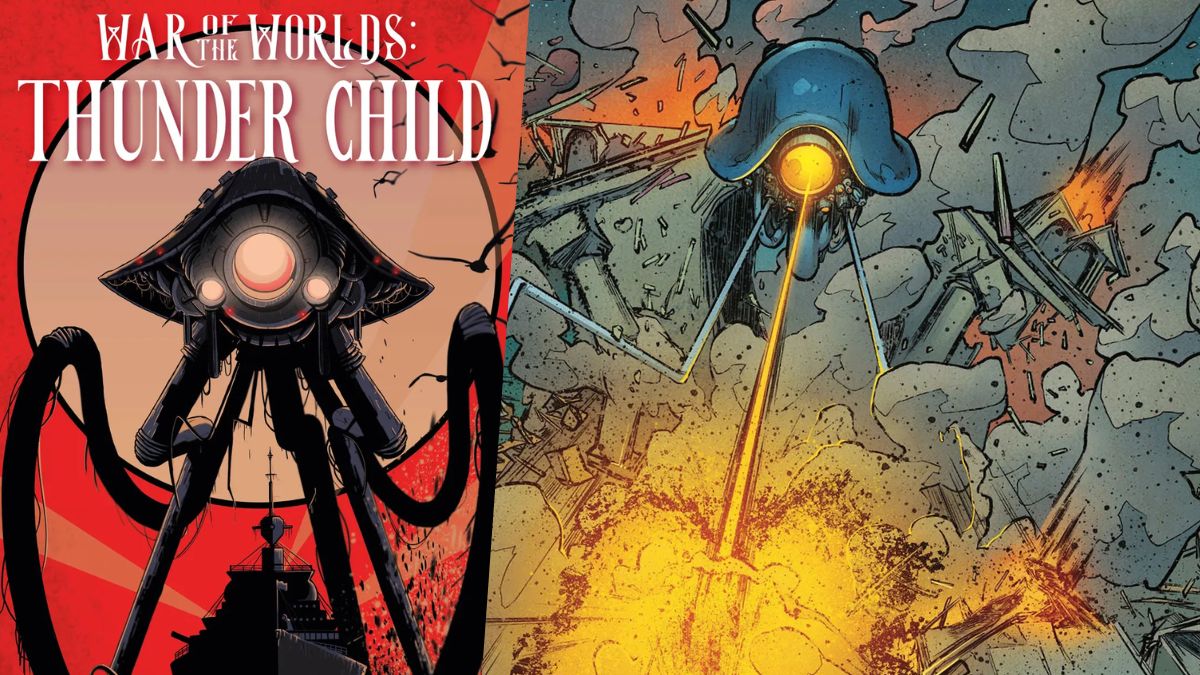
War of the Worlds: Thunder Child is a graphic novel that tells a companion story to H.G. Wells’ seminal novel. Follow the crew of the ironclad that heroically sacrificed itself, destroying two Martian tripods and saving civilian refugees in the process.
Written by Matthew Hardy and Rob Jones with art by Kevin Castaniero and colors by Simon Gough, Thunder Child tells a story that was never covered in the original work. It explores the crew of the Thunder Child, a Royal Navy warship that sacrifices itself destroying Martian tripods to save refugees. H.G. Wells describes the battle surrounding Thunder Child in great detail, but the more personal tales of the warships’s crew are not greatly explored, and this graphic novel does a stellar job at picking up grey areas of the original novel.
Ahead of the graphic novel’s release in June 2026, we recently caught up with co-writer Matthew Hardy to explore this exciting project. How did it come together? What can readers expect? Check out our interview in full below!
Comics Bulletin: I rejoiced when I first heard about this graphic novel. I’m a huge fan of The War of the Worlds, from the original novel, to the musical, and so on. Your graphic novel is fantastic. What drew you to War of the Worlds — and why did you decide to tell the story specifically through the lens of the HMS Thunder Child and its crew?
Matthew Hardy: Really glad you enjoyed the graphic novel. So the original idea to tell the story of the Thunder Child in comic format came from my co-writer, Rob Jones. He’s a massive fan of the Jeff Wayne musical and in particular the Thunder Child segment. He pitched the idea to me – and initially I was reluctant to delve into writing an existing property – especially one so loved and revered (plus fans of certain properties can be very…passionate about any new versions). But the more I looked into the Thunder Child – the more I realised, there was a massive untold story there, a fertile bed on which we could build our own little corner of that world. Plus it was damn fun to write all the battle scenes – carnage is catnip to writers.
When you’re telling a story that sits next to a book written over a century ago, were there ideas you wanted to update or look at differently for today’s readers?
We went into this not wanting to retell War of the Worlds, or update it to a modern setting. That’s been done (and often badly). We wanted this book to be a companion piece to those who love Wells’ original work. Ours is a parallel story that sits alongside the events of Wells’ Novel. We don’t contradict or reinterpret Wells’ work in any way. We just take a minor plot point from the original novel and flesh it out. Thankfully that formula seems to have worked. Hollywood please take note.
But… the book is still written from a modern perspective, all good science-fiction is a comment on the time it’s written, not the period it’s set in. And many of the ideas from Wells’ original novel are still relevant today. So the only major update we enacted, was taking the opportunity to have the ship’s caption be a woman – something we expected pushback on – but that seems to have been very much accepted.
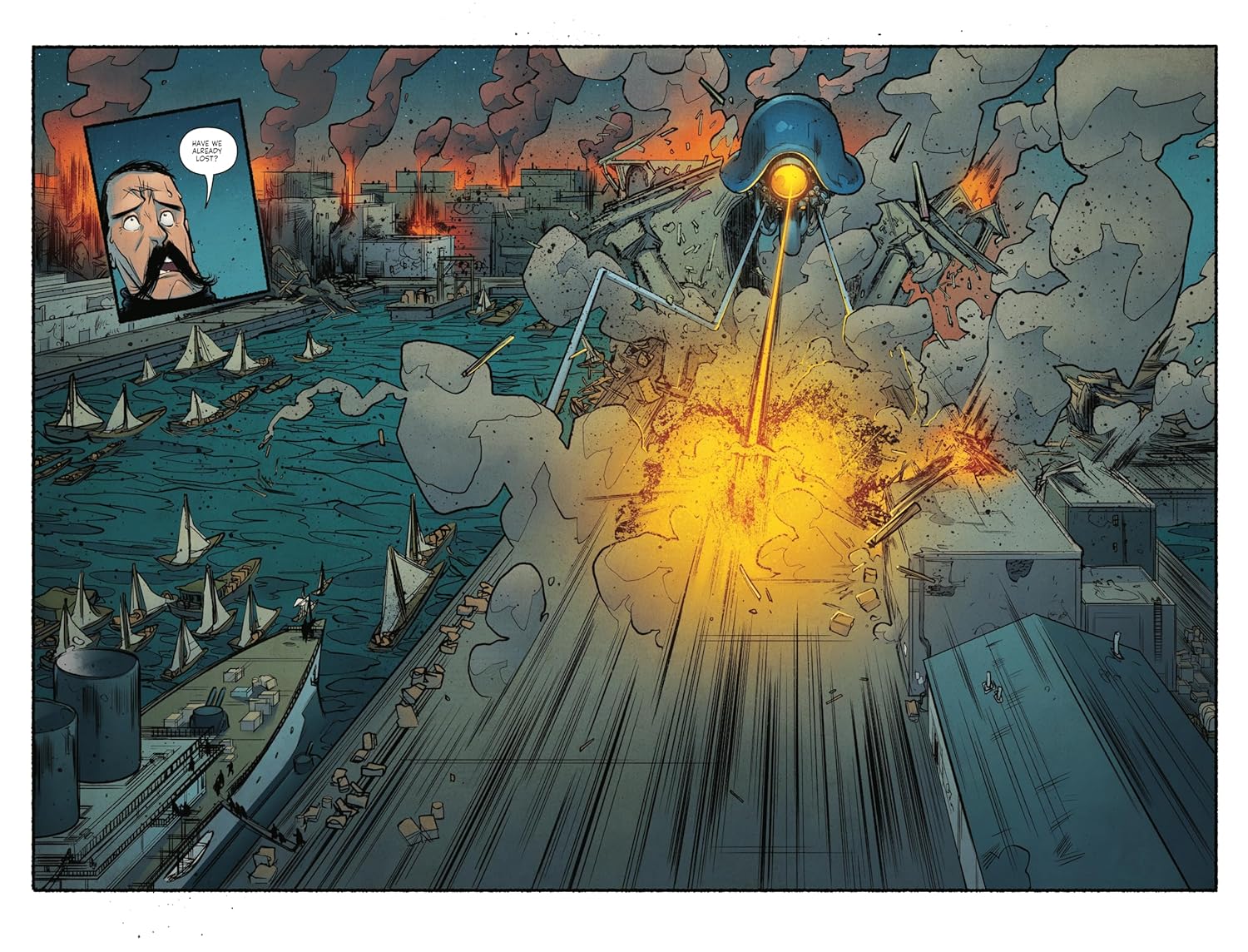
You dig into the Martians, the HMS Thunder Child itself, and the chaos in London — what was the hardest part of the story to really get right?
The book kinda wrote itself – we were lucky in that all the major building blocks we needed – the Victorian setting, the Martian invasion – are so clearly established that we didn’t need to spend any time developing them. We did have to watch our step making sure we correctly reflected the technology of the time. An early draft had the Thunder Child receiving radio from land about the invasion – but ship to land communication of that type hadn’t reached that point of development, so we had to change it. That sort of thing happened a lot.
The other main thing we wanted to get right was the relationship between the characters – the dichotomy between the Majors imperialistic and nationalistic drive, the Young’s impressionist and hope and the Captain’s practicality. And as this seems to drive the story – we think we got that right.
How did you collaborate on this project? What strengths did each of you bring to the table?
Well both of us already had experience writing with other creators, so it was just a case of grabbing the bits of the story we each wanted to write and run with it. I tend to do most of the structure and story beats, Rob works on the layout and set pieces. But saying that there is very little that is solely me or solely Rob. We both wrote and rewrote each other’s pages. We both gravitated to different members of the cast. Most of the Major’s dialogue for example is Rob’s – and most of Simon Youngs is mine. But again we both wrote lines for all characters – it was a true collaborative work.
Apart from the burning horses in part 2 – that was all Rob. Those poor horses. Horse fans – please send all your hate-mail care of Rob Jones.
We’ve seen The War of the Worlds adapted into movies, TV series, a musical, video games, and even a radio drama. What do you think comics can do with War of the Worlds that other mediums can’t?
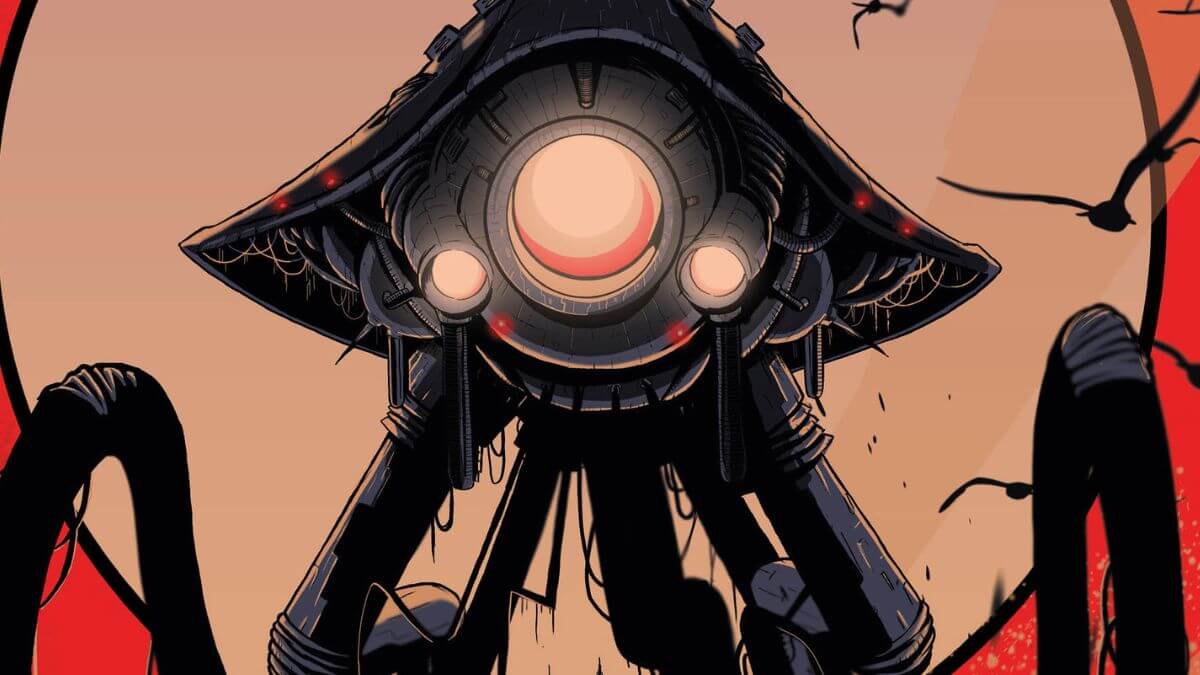
I’m a strong believer that comics can do many things that other mediums can’t. We are limited only by the imagination of the writer and how close to a nervous breakdown the writer can push the artist. But saying that, I’m not sure comics should reinvent War of the Worlds – just maybe help more readers experience the ideas and concepts of Wells’ novel for the first time. Comics do get to design and redesign the Tripods though – we let our array of guest artists on the book all bring their own tripod design aesthetic and they delivered some amazing work.
There’ve been so many adaptations of The War of the Worlds — What do you think is the enduring appeal of the story, and why is now a good time for another perspective on it?
I mean apart from how damn cool and enduring the visual image of a Tripod is, I think the reason why Wells’ work still reinstates today are the evergreen themes that are still prevalent in society today. The rise of authoritarianism, and the associated loss of control and autonomy, human arrogance and how it could well lead to our own ruin – and of course with AI becoming a massive social issue – the concern about technology outstripping mankind’s ability to comprehend and complete with it. So War of the Worlds is still very much offers the escapism present in all good sci-fi, whilst also allowing us to raise important questions about the world around us.
Are there other classic books or worlds you’d love to explore in a similar way?
Well there are some very famous, very fun other HG Wells novels like The Invisible Man, the Time Machine and First Men in the Moon, that we’d kinda like to take a run at.
In fact, we already have a rough outline that picks up a dangling thread from the end of Thunder Child and weaves it into the story of some of those other characters. Its all very early stages and may not happen – but well, watch this space…
The War of the Worlds: Thunder Child graphic novel releases on June 2, 2026 from Titan Comics. You can pre-order your copy here.