This New Comic Book Reimagines the Frankenstein Mythos, Set During World War II
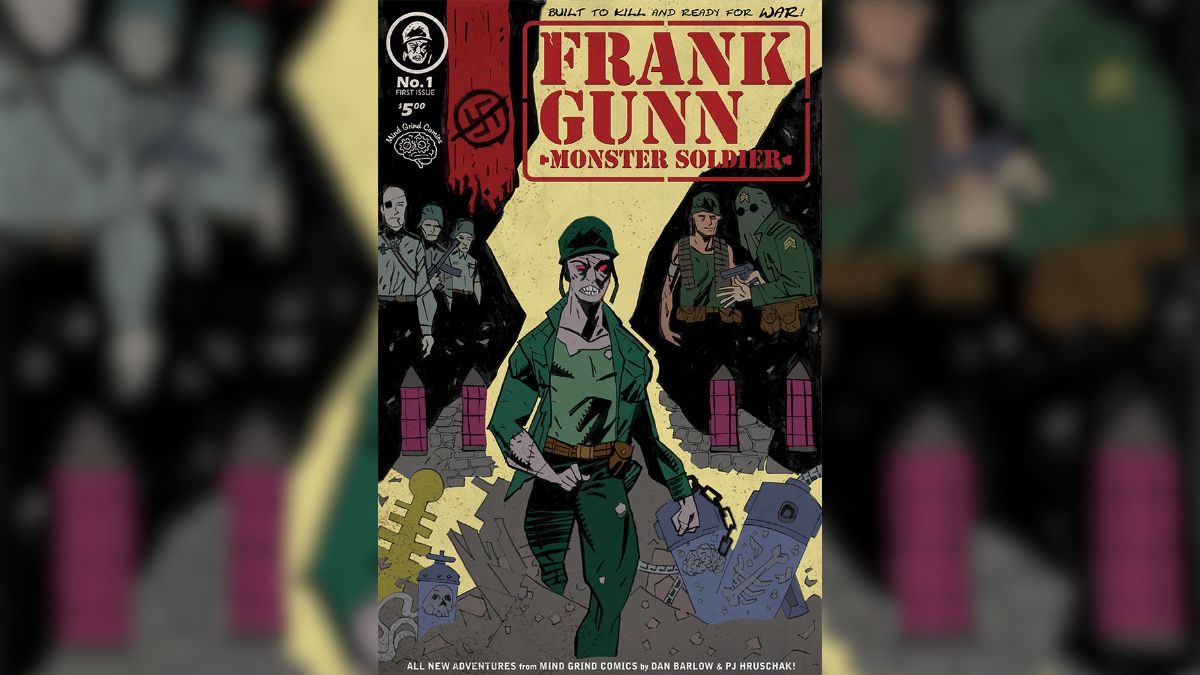
In Frank Gunn: Monster Soldier, a team of special agents from Allied nations go behind enemy lines to neutralize the Nazi’s latest project, Frankenstein’s Creature.
Chances are, you’ve already encountered numerous adaptations and interpretations of Mary Shelley’s seminal novel Frankenstein. Look no further than Guillermo del Toro’s 2025 movie, or Maggie Gyllenhaal’s bold reimagining with The Bride (2026). Different creators have varying approaches on the story.
For writer PJ Hruschak and inker Dan Barlow, the Frankenstein story is reinterpreted and set during the Second World War, where a team of special agents, led by Sgt. Tony Trent trek behind enemy lines, happening upon a destroyed Nazi lab with an enraged monster chained up in its dungeon. Risking their own safety, they befriend the Creature, who becomes known as Frank Gunn.
“Dan and I were working on the story for another title when he mentioned his concept for Frank Gunn,” PJ Hruschak exclusively tells Comics Bulletin. “He told me he worked on it a bit before as a short story, and showed me some of his concept art. I loved the concept and the idea that Frank isn’t simply a lumbering beast, bumbling around the countryside trying to find himself. Or maybe I loved the idea of his name coming from a mishearing of “Frankestein,” which I have definitely worked into the first issue. Putting him in the midst of World War 2 means he’s not only dealing with his personal identity but also immediately learning about friends vs. enemies and dealing with immediate external conflicts before slowing learning to deal with internal conflicts. He might have been created by Nazis but that doesn’t mean he has to be a Nazi soldier, or, really, a monster.”
“My initial design for Frank Gunn drew a little inspiration from the classic movie character minus the neck bolts,” artist/inker Dan Barlow added of his design for the Creature. “He shows a lot of scars and has a patchwork look. This will worsen as the story goes on because he gets patched up with more body parts after fighting other creatures . Frank is not light on his feet and resorts to brute force at critical moments so he is going to get very bruised up.”
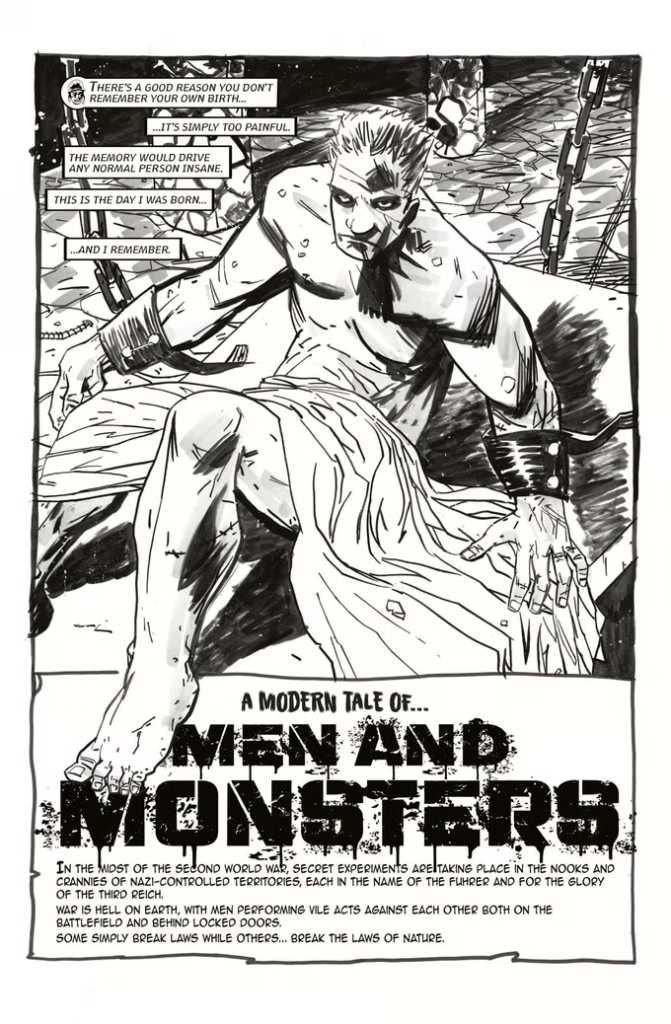
Regarding other Frankenstein adaptations, PJ Hruschak wanted to forge out a different kind of story. “I read Mary Shelly’s book many years ago, and have seen so many movie and other creative iterations of Viktor and his so-called ‘monster’ creation over the years, but I didn’t want to be overly influenced by any one of them, so I purposefully didn’t re-read it or any other works right away,” he explains. “The neck bolts were not included in Dan’s concept art, so I immediately interpreted they as ‘let’s do something different’ from the start. I also did a bit of research into Mary Shelly’s life, so there will be a couple small nods to her as well.”
Despite crafting a story that’s a far stretch from the traditional novel, he had guiding principles to keep certain elements of Shelley’s story in tact.
“The key elements we keep are that he’s built from parts of various people, he’s brought to life by a scientist and he’s going to struggle with his identity quite a bit. I did include the bolts in the book’s name, partially to reinforce the connection and because it’s a little funny. I find humor in just about everything, so I make sure there’s humor in every project, especially one that could spiral into pure gloom and doom. War, Nazis and a sad monster sounds like such a bummer, it needs a little levity to offer periodic relief. But they have to live within the era. Setting it in WW2 also gives us a lot of opportunities to include homages to all the great wartime comics and propaganda from the era. I tried to keep some of the pacing and camaraderie of US war comics, with longer, dramaric explanations, for example, but I it dialed back a bit for modern audiences.”
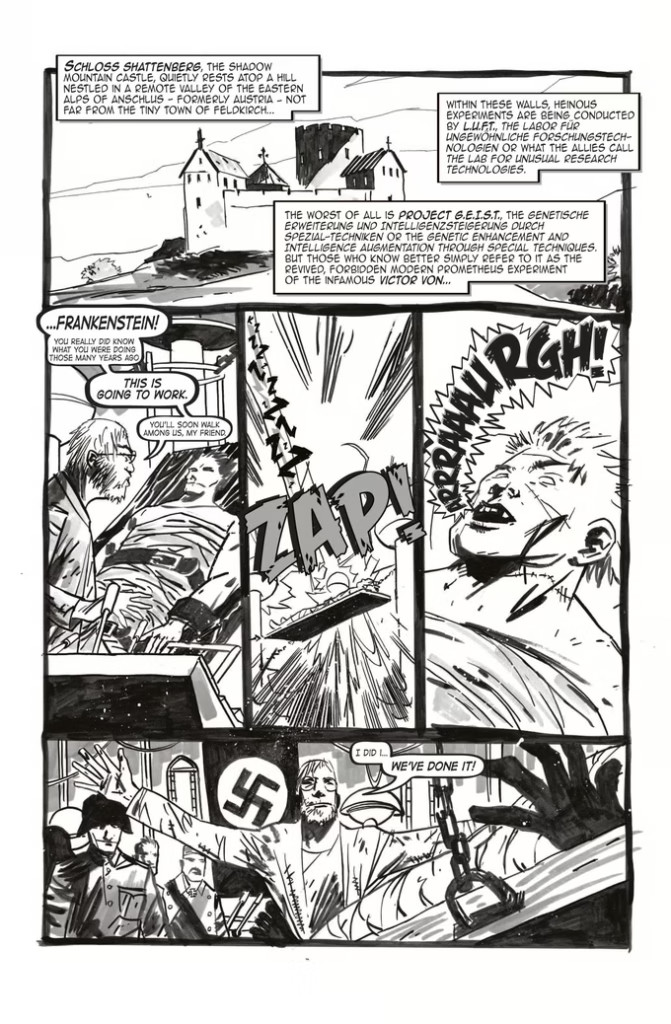
This is PJ Hruschak’s first published comic book. His process of writing the story wasn’t too difficult — the biggest challenge was doing justice to artist Dan Barlow’s idea.
“It was more making sure that I could do justice to Dan’s art, the idea – and expectations – of Frankenstein’s Monster and WW2-era comics and stories. I’ve been reading comics as long as I can remember reading, and a ‘Writer’ credit on a comic book was on my bucket list,” he explains. “I’d also edited a couple dozen manga titles in the past, so, I feel I have at least a decent, long-time familiarity with comic book storytelling. I also have a lot of design and publishing experience, so the lettering felt like a natural thing to just do. The only stressor there was picking up Adobe Illustrator after not using it for nearly 10 years. I also colored a few pages in the book (the inside front cover and back cover), which initially felt the most foreign to me, but ended being a lot of fun. In keeping with the era, and adding more fun, I also designed a fake cereal ad with a couple public domain superhero spokespeople.”
“It is such a relief to have another creative person to bounce ideas off of,” Dan Barlow said. “You would not know that this project is PJ’s first comic book. His editing and writing skills have helped take this character from my sketchbook to a comic book. I have mostly self published my comics since 2022 but this collaboration with PJ has been great! This book is just as much his as it is mine. That’s a good thing.”
As for how long PJ Hruschak foresees Frank Gunn lasting, he has a defined duration in mind. “We want to give Frank and the Shadow Badgers – the elite Allied squad that Frank meets – a complete story, in the range of four to six issues,” he teased. Beyond that, there “are a lot of possibilities” on where the story could potentially go.
‘Frank Gunn: Monster Soldier’ is now live on Kickstarter, where it has almost reached its target.