Interview With ‘Alien: Earth’ Composer Jeff Russo
‘Alien: Earth’ composer Jeff Russo dives into the process of scoring the show’s chilling soundtrack.
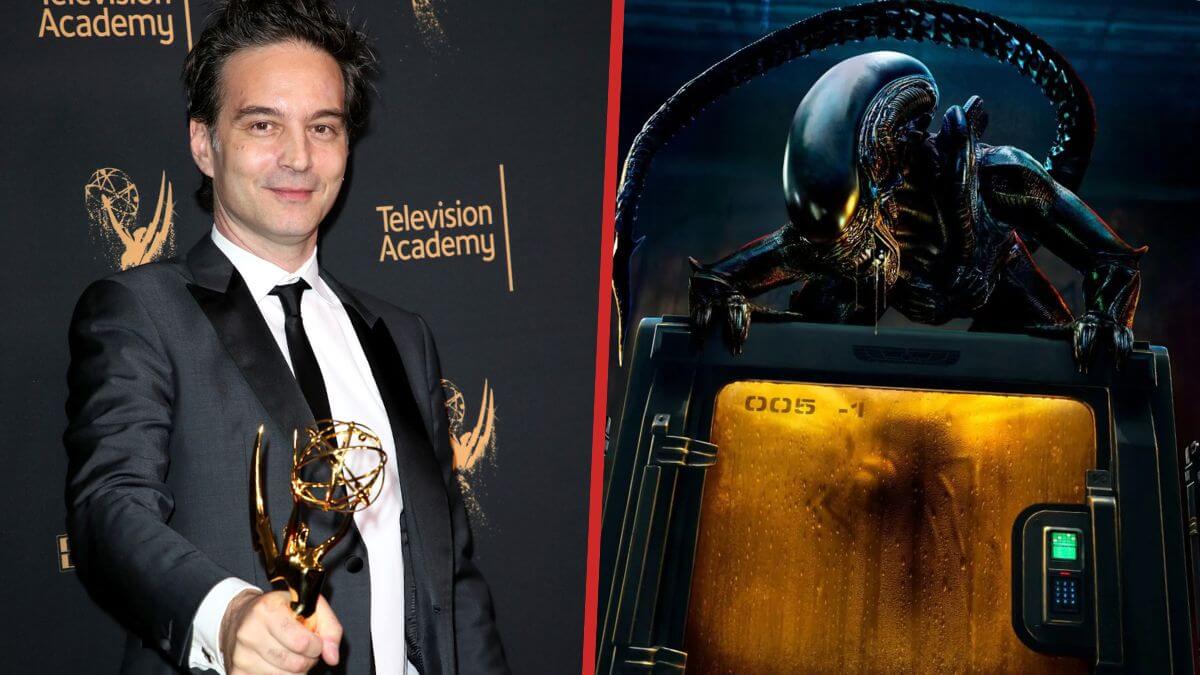
If you’re an avid television watcher, you’ve likely heard the scores of composer Jeff Russo. The Emmy-winning composer recently worked on Noah Hawley’s critically acclaimed Alien: Earth. In this interview, we delve into his creative process and explore how he crafted a hauntingly brilliant score.
Alien: Earth was a mighty fine entry into the legendary franchise. Created by Noah Hawley, the series explores the Alien mythos through a unique new lens, developing the sci-fi world in new and exciting ways. With season 1 wrapped up, we recently caught up with the show’s composer Jeff Russo to discuss his experience and creative process on crafting the show’s tense and chillingly atmospheric score.
Of course, when embarking on his Alien journey, Russo knew that he was standing on the shoulders of giants. “It’s always terrifying stepping into the shoes of giants, right?” he said. “Jerry Goldsmith, James Horner, Elliot Goldenthal, some of our greatest film composers have worked in the Alien franchise. So, there’s that moment of sheer terror and I’ve dealt with that in the past.”
“And then there’s the part where you put the blinders on and you just sort of think about how you want to make the audience feel, how you want to connect the audience to the characters, how you want to connect the audience to this new idea of a show while still trying to keep the feeling of the underlying sort of idea, the underlying IP,” he added. “Noah [Hawley] and I talked a lot about how to go about doing that and studying the originals; not studying them for practical reasons, but studying them for the emotional reasons. What is it that the movies and the score and the characters, all these things, what is it that it makes the viewer feel? And how can I elicit that same feeling by doing something new, while also paying due homage to what came before.”
“I do tip my hat to the Goldsmith score, I do tip my hat to the Horner score, and that I think is fun for everybody. That’s fun for me as a composer, it’s fun for the viewer as someone who’s enjoying the new thing while it’s still sort of elicits that feeling from the original. So, you know, there’s a lot of feelings that go into it.”
As for the biggest challenge he faced in crafting the score, it came down to how it would resonate with viewers. “The biggest challenge is figuring out how to make the audience feel what we want them to feel, and how that manifests itself in music and sound and in style.”
Some of Russo’s best work has come in collaboration with Noah Hawley; look no further than the Fargo series, which he took home an Emmy for. Their creative process has become a masterful collaboration. “Our creative partnership and relationship has been going on for 16, 17 years now. It always evolves, it always develops,” he said. “We talk a lot about story and narrative. He’s a musician as well, so we can speak music, but he’s really good at describing feelings and how he wants something to sound — not just about the way it sounds, but how that sound will elicit a feeling, and what that feeling is. He can be very specific about that.”
How did Jeff Russo develop the musical language for Alien: Earth?
Establishing a distinct and unique score for Alien: Earth meant that Russo utilised a number of instruments and tones.
“I mean, there’s the orchestra,” he said. “There’s a lot of bespoke-style instruments, bespoke percussion instruments, and bespoke melodic instruments. I use this instrument called a bass desmophone, which was built for me by a company named Lunasen Audio in Switzerland, and they make these instruments out of metal, and it’s a really interesting esoteric instrument that has two strings that’s bowed, but is on a triangular resonant chamber that’s made of metal, so, it makes a very deep, rich sound, and that sort of ends up everywhere on the score. I use something called the Aztec death whistle, which sounds kind of like a boat screaming, but it’s not.”
He also explains that the score uses “a lot of synths,” which combine with the orchestra to make a “very sort of unreal sound.”
For the Xenomorph specifically, Russo used both the bass desmophone and Aztec death whistle a lot. “Those sounding instruments, the instruments that create a really otherworldly sound were used for the Xenomorph and the other aliens that we encounter.”
Wendy’s theme ended up being one of the core and most popular themes of the score. “Wendy was one of the earlier character themes I wrote. And that was because it seemed the most important to write as she’s the sort of central character, and the character that will end up connecting all of the characters together.”
Russo had the benefit of recording the score in some of the most legendary and advanced studios in the world — not least Abbey Road Studios. “The recording of the score happened in a number of places. Abbey Road, most notably, Lindhurst Studios, which is also in London, and here at my studio in Los Angeles,” he said.
In terms of Abbey Road, the opportunity to record there was special. “Some of my favourite scores were recorded in that room. That room has a very identifiable sound to me,” he said. “So when the strings play up high and the melodic nature of that sort of sound, you know, when I hear that, I recognise it. I hear it and go,’ oh, I know that sound’. I’ve heard that sound on many scores.”
To close off the interview, we asked Russo about which projects he’s currently working on. ‘I’m working on a couple of things,’ he said. “Most notably, I think Starfleet Academy is the big one that’s going to come out first. I think that’s coming out January or February.’
We thank Jeff Russo for his time. This interview has been edited for clarity and brevity.
Alien: Earth is now streaming on Disney+. Check out our review of the series here.
[forminator_form id=”842″]