Zack Slattery on ‘The Brooding Muse’: Building a Comic Universe Where Consequences Matter
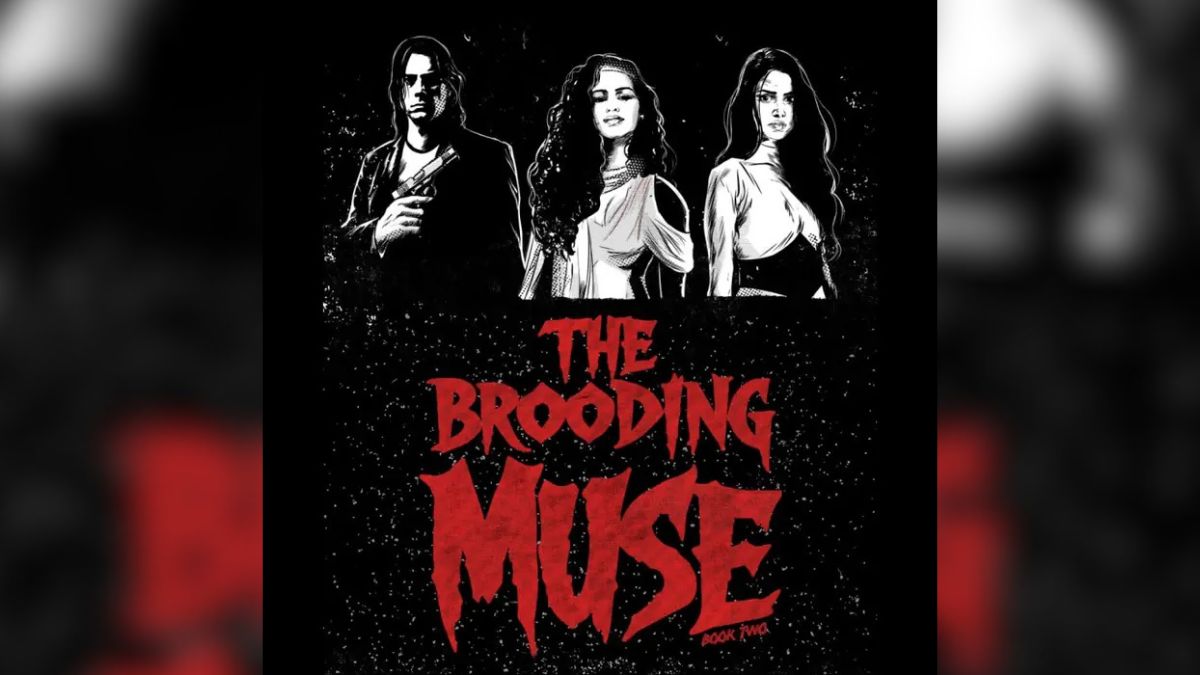
When indie comics like The Brooding Muse truly captivate us, we simply must write about them. In this case, we interviewed Zack Slattery, an indie comics creator whose gritty series draws inspiration from comic titans such as The Sandman, Hellblazer and Doom Patrol.
While we at Comics Bulletin love writing about Marvel and DC, our long-time readers will know that we put a particular emphasis on supporting and uplifting indie creators. Some of our absolute favourites come from the indie space. Because there’s so many of them, we can’t cover them all, but we do hold a weekly indie spotlight on X to give everyone their say; it’s a place for creators to promote themselves. As a small team, we’d be fighting a losing battle to review and keep up with every indie comic that shows shown to us. However, sometimes a new indie project comes along that we know we must cover. The latest to arrive in our inbox was a black and white horror graphic novel series called The Brooding Muse by creator Zack Slattery.
There was something about The Brooding Muse that stood out; the darkness, the grit, and the overpowering idea that everything has consequences. As the official description reads: it’s a creator-owned dark fantasy mythology where fractured minds move through haunted landscapes, where every decision accumulates consequence, where the dread is not decorative but structural. The series takes inspiration by some of the most celebrated dark fantasy comics out there, including Sandman, Hellblazer, and Doom Patrol. The whole idea behind The Brooding Muse blew me away.
The Brooding Muse is something that I knew our readers would love. But rather than just sharing the series, we reached out to Zack Slattery himself, the creator of The Brooding Muse, to discuss his sprawling, gritty epic.
Check out our interview with Zack Slattery down below:
Could you tell us about The Brooding Muse? What is it? And what’s the style of universe you’re building?
It starts with a feeling most of us have had at some point — finding something you weren’t looking for and deciding to take a closer look.
Every once in a while, you find something that makes you stop and look closer. You don’t know what it is yet. You don’t know if it’s for you. But something about it feels like it has a history you haven’t been told. That’s the feeling I wanted The Brooding Muse to create before a reader even opens it — and then I wanted the inside to be worth that feeling.
On the surface, it’s a dark fantasy graphic novel universe. Black and white. Psychological horror. Existential themes. One canon, serialized continuity, a real reading order where events accumulate and consequences don’t get walked back. Published through Cherry Bomb Comics LLC, our own imprint — Max’s and mine — so there’s no distance between what we intended and what ends up on the page.
But the structure isn’t really the point. The structure is just how we built the thing we actually wanted to make.
What we wanted to make was a universe that feels inhabited. Not heavy in he grimdark sense where suffering is wallpaper — heavy the way a decision you can’t take back is heavy. The world remembers what happens in it. Characters carry their damage forward. Places hold what’s been done in them. We didn’t engineer that quality into the universe. We followed it. The stories kept going somewhere, and we kept going with them, and not all of those places were comfortable to follow into.
I kept looking for that in other work and not finding it. A dark fantasy universe with real continuity, where the darkness wasn’t decorative, where reading everything gave you something no single volume could. Max and I built The Brooding Muse because we needed it to exist and it didn’t. That’s still the most honest thing I can say about where it came from. There are things in the later volumes that we built in early and are only now paying off — the world has been running longer than most people know.
What titles and which creators are your biggest inspirations?
That’s an easy one for me. Sandman first, because it’s unavoidable and honest. What Gaiman built was a mythology that felt genuinely ancient — it had weight, internal logic, consequence that accumulated across the whole run. I go back to it not to imitate it but to remember what’s possible when someone commits fully to what the form can do.
Hellblazer, especially Delano and Ennis. That book never let Constantine off the hook, I mean never. The world it built was cruel and specific and the darkness was earned — it meant something. That distinction matters to me more than almost anything: darkness that means something versus darkness as performance. Constantine didn’t escape things. Things followed him. That’s a different kind of story.
From Hell for proving you could do almost anything in sequential art if you were serious enough about it. Moore and Campbell built something that dense and committed — and it worked. There’s no safety net in that book. You feel it.
Morrison’s Doom Patrol is one I keep returning to, and it took me a long time to understand exactly why. It’s not the surrealism, though the surrealism is extraordinary. It’s the people. The characters in that book carried powers that felt less like gifts and more like conditions they’d been handed and had to figure out how to live with. They were strange and damaged and disconnected, and many of them didn’t know where they belonged or whether belonging was even available to them. Morrison never asked you to find them remarkable because of what they could do. He asked you to recognize them because of what they felt.
Most of us have been outside something. Most of us have had that experience of not fitting the shape the world seemed to want us to be — of carrying something we didn’t ask for and not knowing what to do with it. Doom Patrol made that legible through characters who happened to be, on the surface, completely bizarre. The weirdness wasn’t the point. The loneliness underneath it was the point. And the loneliness didn’t resolve cleanly. It just became something the characters learned to move through or didn’t.
I think that’s the thread that runs directly into what we’re building. The characters in The Brooding Muse aren’t interesting because they’re exceptional. They’re interesting because they’re human — damaged, searching, carrying weight they accumulated before the story started. The dark fantasy setting is the frame. The people inside it, and what happens to them when the world pushes back, are the reason. Some of them have been in this universe long enough now that what’s happened to them is no longer something I planned. It just became what it had to be.
Outside comics — Music for sure, and Carpenter for patience and dread. He nailed the sense that something is already in the room, has been for a while, and you just haven’t looked in the right corner yet. Giallo films, the genre’s narrative unraveling right down to sometimes the very last frame to ferret out the killer gets addictive the more you watch them. And underground comix, the whole lineage, work that existed outside the system and didn’t ask permission to go somewhere uncomfortable.
What excites you most about long-form, interconnected storytelling — especially when anthology content is having such a resurgence?
It’s funny, because I actually love anthologies. Anthologies do something beautifully: they reset. Every story is complete in itself, the slate wiped, nothing carried forward. There’s real craft in that and I don’t want to minimize it. A reset is also a kind of permission. It tells the reader — and maybe the writer — that nothing here will follow you out.
What I kept wanting was a universe without that permission. A universe that remembered. Not just these books exist in the same world — that’s cosmetic continuity, wallpaper. What I mean is a universe where a decision a character makes in an early volume arrives two books later as wreckage. Where things that happened keep having happened. Where the reader, staying long enough, starts to feel the accumulated weight of a world that doesn’t forgive easily and doesn’t forget at all.
That’s a different kind of contract with the reader. It says: stay with this. There’s something here that can only be found over time, and you won’t get it by arriving late. Connections emerge that were never announced — they were just there, built into the structure, and the reader finds them. That discovery, when it happens, registers somewhere specific. It feels earned because it was.
The long form earns things the short form structurally can’t. Not because one is better but because they’re doing different work, asking different things of the reader and the story. What excites me is building something that compounds — a universe where the longer you’re inside it, the heavier it gets. Where leaving feels harder than arriving.
That’s what we’re trying to make. Some of it we’ve already made. There are readers who came in at the beginning who are carrying things now that someone arriving today will have to go back and find. That gap is real. It’s already there. I don’t know yet where all of it leads. We follow the consequences and see.
Tell me about the use of black-and-white art — what was the driving force behind this creative approach?
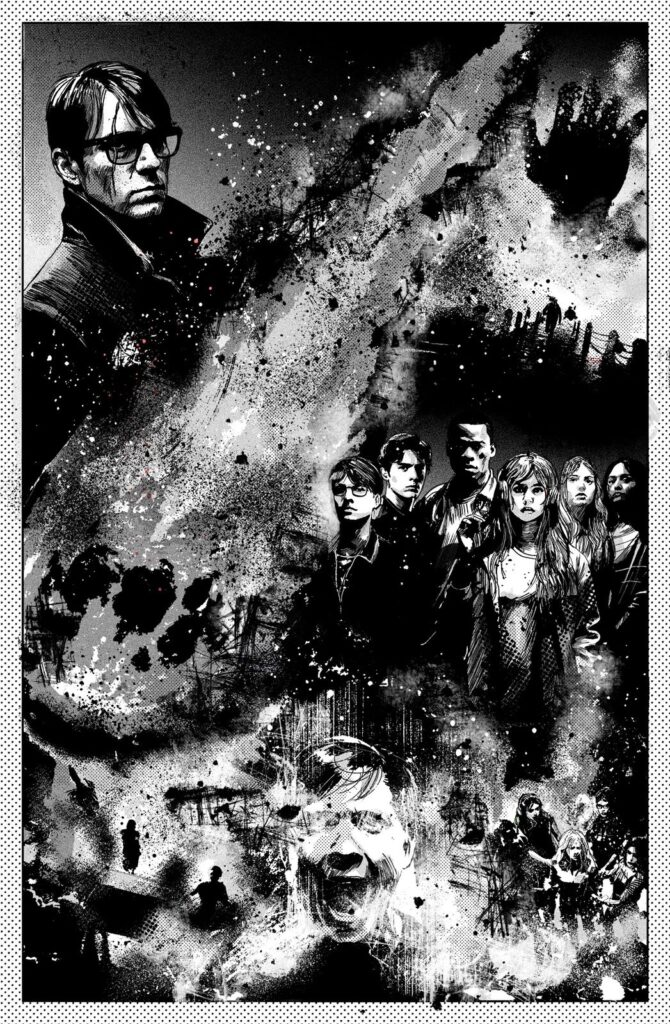
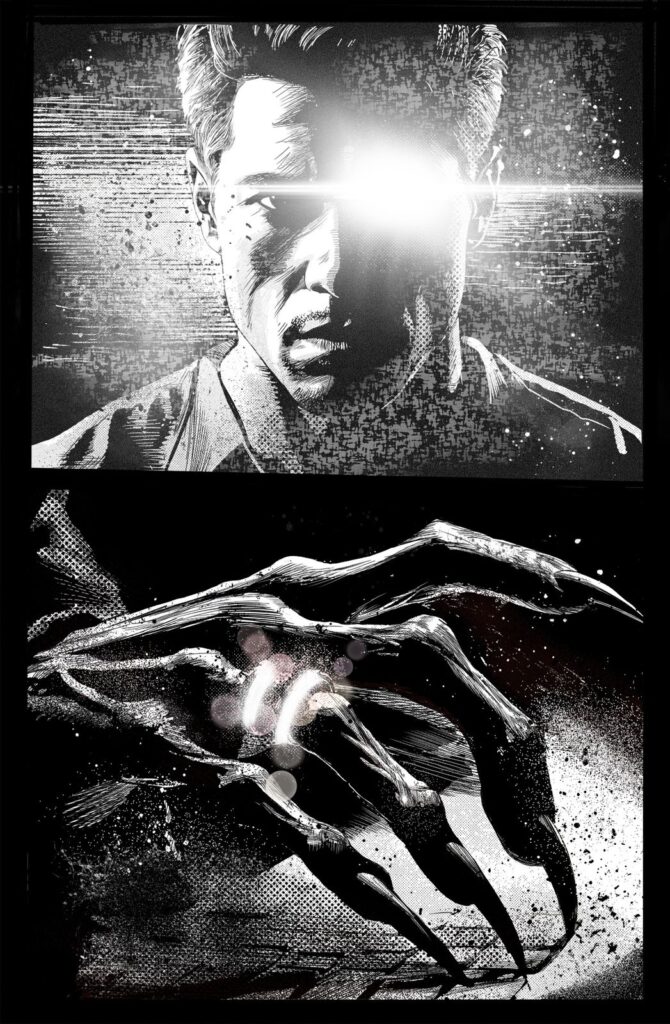
Black and white doesn’t editorialize. That’s the center of it. Color, used a certain way, tells you how to feel before you’ve had a chance to bring your own response. It manages the distance between you and the image. With high-contrast ink work, the image is just there — stark, unmediated — and whatever the reader brings to it enters the space that color would have filled. The darkness in a panel stays dark. It doesn’t resolve into something easier to look at.
For the themes we’re working with — dread, consequence, identity, the weight of things that can’t be undone — that openness feels essential. We’re not trying to tell readers how to feel about what they’re seeing. We’re trying to put them in a room with it. Color would have given them distance. We didn’t want to offer that.
There’s also the lineage. The underground comix tradition we’re drawing room was almost entirely black and white, and that wasn’t economics. It was a position. It said: this work exists outside the commercial system. It doesn’t compete on spectacle. It competes on something else — on what’s actually inside the frame, and whether you can feel it.
The visual language and the thematic content arrived together for us. They weren’t separate decisions we reconciled later. The black and white isn’t style laid over the universe. It’s part of what makes the universe feel the way it feels. You can’t separate them. Looking back across everything we’ve made, that hasn’t changed — if anything it’s become more itself.
Was it early in the process that you landed on black-and-white as the visual language?
Yeah, essentially from the beginning. The tone and the visual language came together. I’m not sure I could have articulated the tone without the visual, or the visual without the tone. They arrived as the same thing.
The word I kept coming back to was restraint — not minimalism for its own sake, but the specific gravity of withholding something. Letting shadow do the work a color palette would do more easily, but differently. Letting the reader lean in rather than having the image move toward them. The image stays still. The reader has to enter it.
I’d been thinking about what Neil Gibson did with Twisted Dark — that unadorned ink work that matched the subject matter with such precision. It didn’t aestheticise anything. It didn’t soften the edges or make the darkness comfortable to look at. It just showed you what was there and let you deal with it. There’s a philosophical position in that I respond to, the refusal to give the reader a comfortable distance from the image. The refusal to make darkness beautiful in a way that makes it safe. Future books we are working on are heavily leaning into that.
The other side of it is freedom. I grew up loving older comics where it felt like anything could happen on the page. There was a grit to them that I still respond to — that dirty, imperfect energy that came from ink, paper, texture, and creators figuring things out in real time. Then you’d hand it off to the printer and half the time who knew what was coming back. You could feel the hand of the artist in the work. Black and white gives me access to that feeling.
Between scanned textures, digital brushes, traditional ink techniques, collage elements, and all the tools available now, you can shape the visual language of a page however the story needs it shaped. Musicians have walls of guitar pedals to find the right sound. Artists have brushes, textures, marks, and techniques that help find the right feeling. The goal isn’t polish. The goal is expression.
For me, comics always come back to the moment inside the story. What does this scene need? What does this emotion need? Sometimes that means clean storytelling. Sometimes it means tearing the panel apart. Sometimes it means letting shadows spill into the gutters, roughening the page up, introducing grit and texture and noise. Sometimes you crumble up the page itself and toss it in the corner, go back to it later on and this time it works with the tears and creases still visible. Sometimes it means letting the page stop behaving the way pages are supposed to behave. Black and white gives you permission to do that. It reminds you there aren’t really rules beyond serving the story honestly.
It feels less like coloring inside the lines and more like building the lines as you go, which is a blast really. The page can be clean when it needs to be clean, and it can be dirty when the story needs dirt under its fingernails. That’s what I love about working in black and white — it gives you room to experiment, to deconstruct, to follow an idea further than you might otherwise let yourself.
At its best it reminds you that comics aren’t a set of rules. They’re a language. We’ve made enough pages now that I can see what our language is becoming — and it’s not what I expected when we started. And every story deserves to find its own voice.
If you had to describe the Brooding Muse philosophy in one word — or a sentence — what would it be?
The sentence I keep coming back to is: consequences are the only honest storytelling.
Everything follows from that. If the darkness doesn’t cost anything, it’s decoration. If characters don’t carry what’s happened to them, the story is lying — performing weight without having any. We follow the consequences wherever they lead, even when they lead somewhere uncomfortable, even when there’s no clean resolution waiting at the end of it. Especially then.
The philosophical horror we’re drawn to — Barker, the best of the Vertigo tradition — doesn’t use darkness as spectacle. It uses it as inquiry. What does this mean? What does it cost? What does it do to the people moving through it? Those questions have to have real answers in the work, answers the story actually earns, or the whole thing is just atmosphere pretending to be something more.
One word? Weight.
Not shock. Not style. The specific gravity of a world that remembers, and characters who can’t put down what they’re carrying — who move deeper into things rather than out of them, because that’s where the story actually goes when you follow it honestly. There’s something waiting in that direction. It’s already in the work — we put it there without fully knowing what it was. We’re still finding out what it is.
We thank Zack Slattery for his time. You can buy 'The Brooding Muse: Book One' here.