Crafting a Comic Based on Arthurian Legend: We Talk to ‘Morgana Pendragon’ Writer Madeleine Holly-Rosing
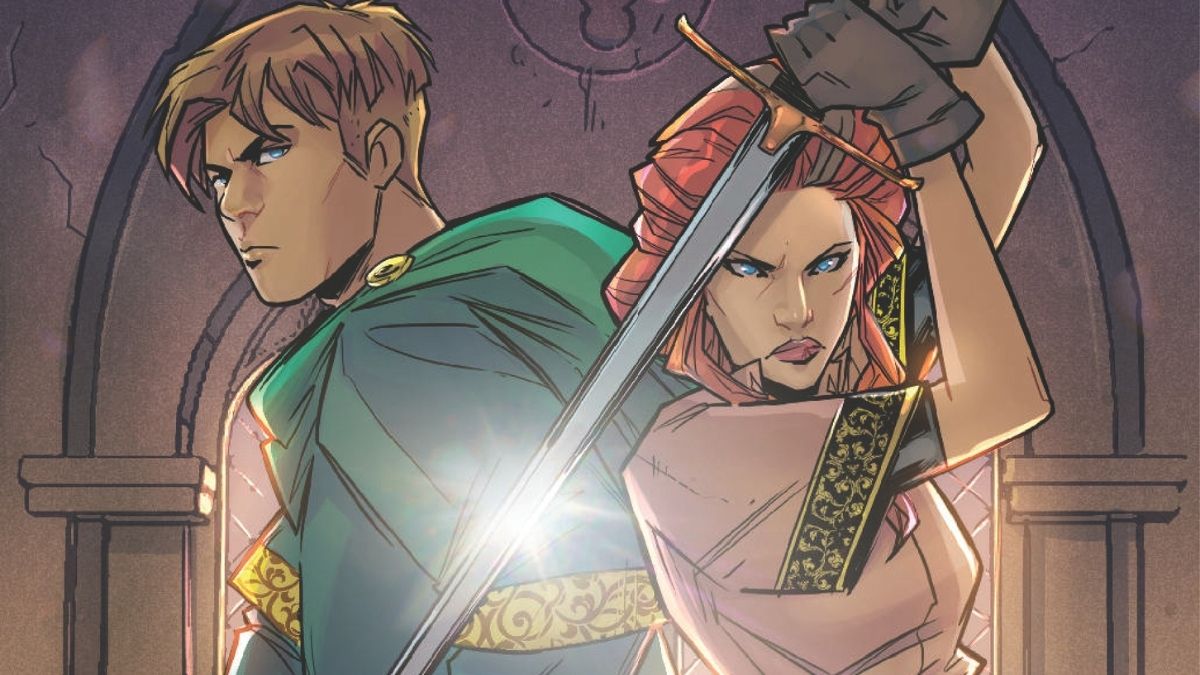
If you’re a fan of Arthurian legend, there’s one comic you simply must be reading. Introducing Morgana Pendragon, a unique retelling of Morgana’s story from writer Madeleine Holly-Rosing, illustrated by Alden Kaye, coloured by Warnia Sahadewa, and lettered by Troy Peteri.
Madeleine Holly-Rosing is best-known as the writer and creator of steampunk supernatural series, Boston Metaphysical Society (or BMS, as it has become known). Well regarded in her field, notably winning the Sloan Fellowship for screenwriting. For fans of English legend, Holly-Rosing has one comic in particular that piques our interest: Morgana Pendragon. We rhapsodised about the comic in our review (which you can read here), and we also sat down with her to discuss the comic. Here’s our interview.
So, first and foremost, how did Morgana Pendragon come about? “In science fiction—particularly growing up—the Knights of the Round Table always sparked my interest,” Holly-Rosing says. “The Sword in the Stone, Merlin, Morgana—who doesn’t love that? There were so many stories, TV shows, and movies. I remember one older, very strange film where Helen Mirren played Morgana. It was a bizarre interpretation, especially how they handled Mordred, but it’s something I’ve always loved.”
“I’ve been reading constantly since I learned how to read, and Arthurian legend was always something I enjoyed. As I got older I earned an MFA in screenwriting from UCLA. I wrote a screenplay there called Morgana, which was very different from the comic. It featured a younger Morgana who magically time-traveled to the present day, dealing with an antagonistic son who followed her. That script was written about twenty years ago.”
The origins of the comic began with the story being geared towards the television medium. “At the same time, I was developing Morgana as a TV show and also working on Boston Metaphysical. In my TV production class, everyone had two projects, and the class voted on which one would continue to a pilot. Boston Metaphysical won by one vote. My student producer asked if I was disappointed not to do Morgana, and I said no—I really liked Boston Metaphysical (or BMS, as we call it). Years later, that became a comic and ultimately my flagship series, the foundation for everything else and the fanbase.”
The Morgana Pendragon comic out now is very different to the one she originally dreamed up. “Eventually, I reached a point where I wanted to return to Morgana. It had always been on the back burner, but I didn’t want to tell the same story. We don’t live in the same world, and I’m not the same person I was then. Everything had changed. So I put that old script completely aside and started fresh,” she added.
The concept Holly-Rosing landed on was unique, telling a portrayal of Morgana rarely covered in interpretations. “I realized we don’t see many middle-aged women in comics who have real agency. They’re usually portrayed as grandmothers, sidekicks, girlfriends, or wives—and when they are leads, they’re often younger. When people say ‘middle-aged woman,’ they usually mean the lower end of that range,” she explains. “I thought, no one has ever really done an older Morgana. The story space is wide open. I wanted to give her agency, while still acknowledging the traditional baggage from writers like Mallory and others. Morgana is almost always portrayed as a seductress, an evil sorceress—everything negative—simply because she was a woman with power. Historically, men have denigrated women like that because society punishes women who know their own minds, have their own agendas, and refuse to accept nonsense. If you’re that kind of woman, you must be evil.”
Our full interview with Madeleine Holly-Rosing is below:
Your characters as a whole represent many ethnicities. It’s a melting pot of different cultures. Was that a conscious decision?
It was both conscious and realistic. Medieval England wasn’t all white, despite how films and early TV portray it. People traveled extensively. Merchants came from China, Korea, the Middle East, and Africa. There are documented accounts of Arab traders reaching Viking territories like Sweden and Norway. Shows like Vikings and Vikings: Valhalla actually depict this well—though many of those individuals would historically have been slaves, something the shows don’t focus on much.
The Silk Road wasn’t one road—it was a network spanning Europe, Asia, and Africa. So I asked myself: why couldn’t there be a Korean merchant who was a widower traveling with his daughter? If he died—and that happened often—she might be taken in by a friend until his political fortunes collapsed, leaving her enslaved. That’s Kyo-Joos’ story.
Then there’s Ursmar, a petty thief from Francia who becomes best friends with Conall, a Roman mercenary. Gheti comes from West Africa and worked as a guardsman for a merchant until things went sideways. I wanted each character to have a plausible reason for ending up where they did and for seeking new work. It’s a random group, but one that makes sense historically.
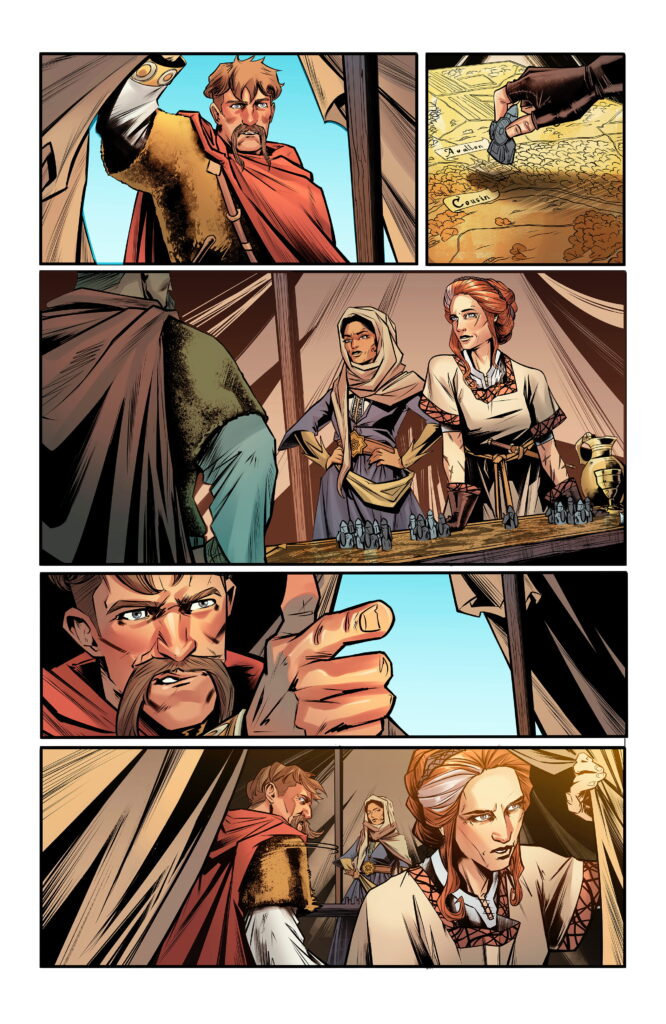
I also wanted to ask about Mordred. In different versions of the legend, he’s Morgana’s son, ward, friend, or much younger than her. Why did you choose this portrayal?
Traditionally, Mordred is Morgana’s son, though his father is often unclear. Including him adds family and political drama. Both Morgana and Mordred could have legitimate claims to the throne. If it were revealed that he was her son, making him a Pendragon and Arthur’s nephew, it would spark civil war. He understands this, and he has no desire for the throne anyway—who would want that responsibility?
If you continue the series—and now we know you are—will you focus solely on Morgana, or explore the other characters and the past?
The answer is yes to all of that. What I may do, as I’ve done with Boston Metaphysical, is tell future storylines in graphic novel form while handling prequels in prose. That’s largely a budget decision—comics are expensive to produce, prose is cheaper. So there may be short stories or novellas about the early days.
One reviewer called Morgana and her team the “medieval A-Team” and wanted to know how they came together. That would be fun to explore. I’ve done similar things with BMS through one-shots and short comics added to collected editions to fill in character gaps. So it’ll likely be a mix of prose and comics.
If this became a show, have you thought about casting?
Eva Green would be perfect for Morgana. She’s the right age now and has already played similar roles. For Mordred and the rest, it’s harder to say—actors come and go, and what works now might not in five years.
Who has been your favorite character to write?
Right now, Morgana. That could change as the series evolves. With BMS, it started centered on Samuel Hunter, but over time I grew to love writing Granville—who was a real historical figure living at the same time as Tesla, Edison, and Houdini. He sued Edison for patent theft and won. Which character I enjoy most depends on where my head is, but since this is Morgana’s first series, it’s very Morgana-centric.
That’s similar to how audiences experience stories—the favorite character in part one isn’t always the favorite in part two.
What’s in store for the future of Morgana Pendragon?
In issue three, I’m going to address the claim that Morgana slept with her brother Arthur and gave birth to Mordred. Salacious accusations are leveled at almost every powerful woman in history. One early review—positive overall—assumed I was following Malory’s version and brought that cultural bias into the reading. I’m not. Just because a male writer said it in a fictional account doesn’t make it true. It’s all fiction anyway.
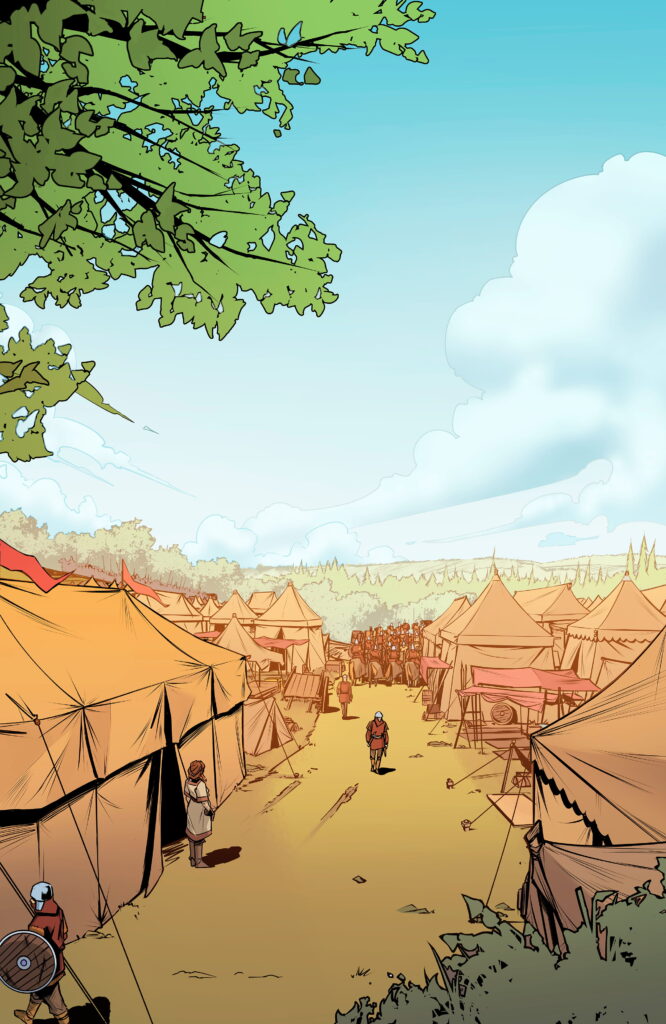
What I also try to do—both here and in Boston Metaphysical—is balance fantasy with the reality of the time period. The story is firmly set in a sixth-century medieval world, using historically appropriate weapons. There’s a touch of science as well, because Morgana no longer has her magic. Her team uses science, which in that era looked like magic to people who didn’t understand it. I don’t go deeply into that in this series due to space, but future prequels might explore how science helped them win battles simply by terrifying their enemies.
I like grounding fantasy in reality so readers can buy into the world. Once they do, they’re more willing to suspend disbelief when something fantastical happens and go along for the ride.
Do you have other projects coming up?
I’ve been working on a Lady Mechanika story called The Mechanical Menagerie. The first two issues successfully funded on Kickstarter this year. Joe [Benitez] is finishing the art for issues three and four; the scripts are done, and I’ll do a final dialogue pass once the art is complete. That will likely be on Kickstarter next year and then published through Image Comics.
Image is creator-owned, so you have to fund production yourself. They republish later with different covers. Joe Benitez and Marcia Chen, his co-writer and editor, have been managing that process.
The art for Morgana #2 is done, and the Kickstarter launches in February. Take a look at the official page here. You can also check out the Kickstarter for Lady Mechanika: The Mechanical Menagerie here.We’re very excited by what’s to come!