How Artist Sarah Webb Brought ‘Worlds Beyond Number’ to Life in Comic Form
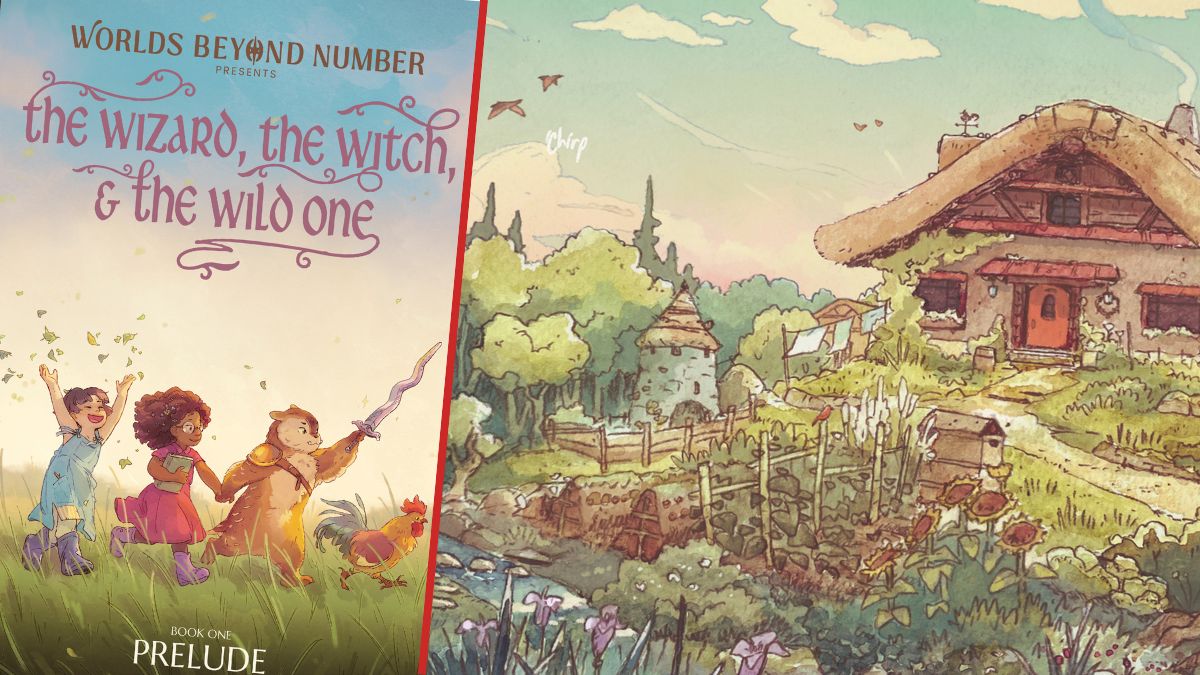
From writer Jadzia Axelrod and illustrator Sarah Webb, the graphic novel The Wizard, The Witch, and the Wild One is the first-ever adaptation of the narrative podcast series, Worlds Beyond Number, and has reached over a two million dollars in Kickstarter funding.
Skybound‘s latest Kickstarter graphic novel, The Wizard, The Witch, and The Wild One, has been a monumental success. To date, the project has smashed its target, garnering over $2 million in funding from over 15,000 backers. The graphic novel is based on the hit fantasy podcast by Brennan Lee Mulligan, Erika Ishii, Aabria Iyengar, and Lou Wilson.
The graphic novel adaptation has a top tier creative driving force behind it, including writer Jadzia Axelrod, known forGalaxy: The Prettiest Star, Galaxy: As The World Falls Down, Hawkgirl: Once Upon a Galaxy, and Justice League Intergalactic for DC Comics. On lettering duties is Sara Linsley, whose wide-ranging work aspans VIZ Media, DC Comics, Abrams ComicArts, Scholastic Graphix, and more. Bringing the story to life through art is Sarah Webb; known for her otherworldly style, she has vast experience working in TV animation and video games.
The official logline for The Wizard, The Witch, and the Wild One reads: “Snow falling over endless white sand...so begins the THE WIZARD, THE WITCH, AND THE WILD ONE. In this first adventure, Suvi, Ame, and Eursulon meet as children, and this story reveals the events that will shape their destiny, bond them as friends, and bring them back together many years later…”
As the Kickstarter campaign nears its conclusion, we recently had the chance to catch up with artist Sarah Webb to discuss her experience working on the graphic novel. Check out our Q&A below.
I’ll be honest, I’m new to this story. But when I looked into it, the magic of it all captivated me instantly and I love the creativity and imagination surrounding it. How did you come to be involved in this graphic novel?
I had a similar experience! I hadn’t heard the podcast until the editor here, Alex Antone, reached out to pitch the adaptation to me. But I was so excited about the story after listening to a few podcast episodes, it totally captured my heart, and felt like a story I both wanted to see as a comic, and wanted to draw myself. I did a few test pages and character sketches before coming on board officially.
The Worlds Beyond Number fanbase is incredibly invested. How does it feel to be involved in a project that already has such a legion fanbase waiting in the wings (especially given the immense success of the Kickstarter campaign!)
It’s wonderful! The feeling is like being buoyed up by a thousand balloons, haha. It’s most important to me that the WBN likes the way I’m adapting their story to a new medium, but it’s been wonderful to see the support and welcoming response from their audience, too.
The Worlds Beyond Number podcast is known for being an auditory experience. What was your initial process for visualising these characters in your mind before putting pen to paper?
Actually, putting pencil to paper is usually one of my first steps. I listen to audiobooks and podcasts all day while I work, and if I really like a character or scene in a story, I’ll always do a little sketching of it on the side. Drawing helps clarify the visuals I’m imagining in my head, for myself as much as for anyone else, and turns an idea from something vaguely imagined into a problem I can start solving. Once I get a very rough sketch down, I can start gathering visual references too – and that’s anything visual, not just other illustrations or comic art. I think I spent a lot of time looking at photos of children working(?) on or exploring gardens and farms for clothing ideas here.
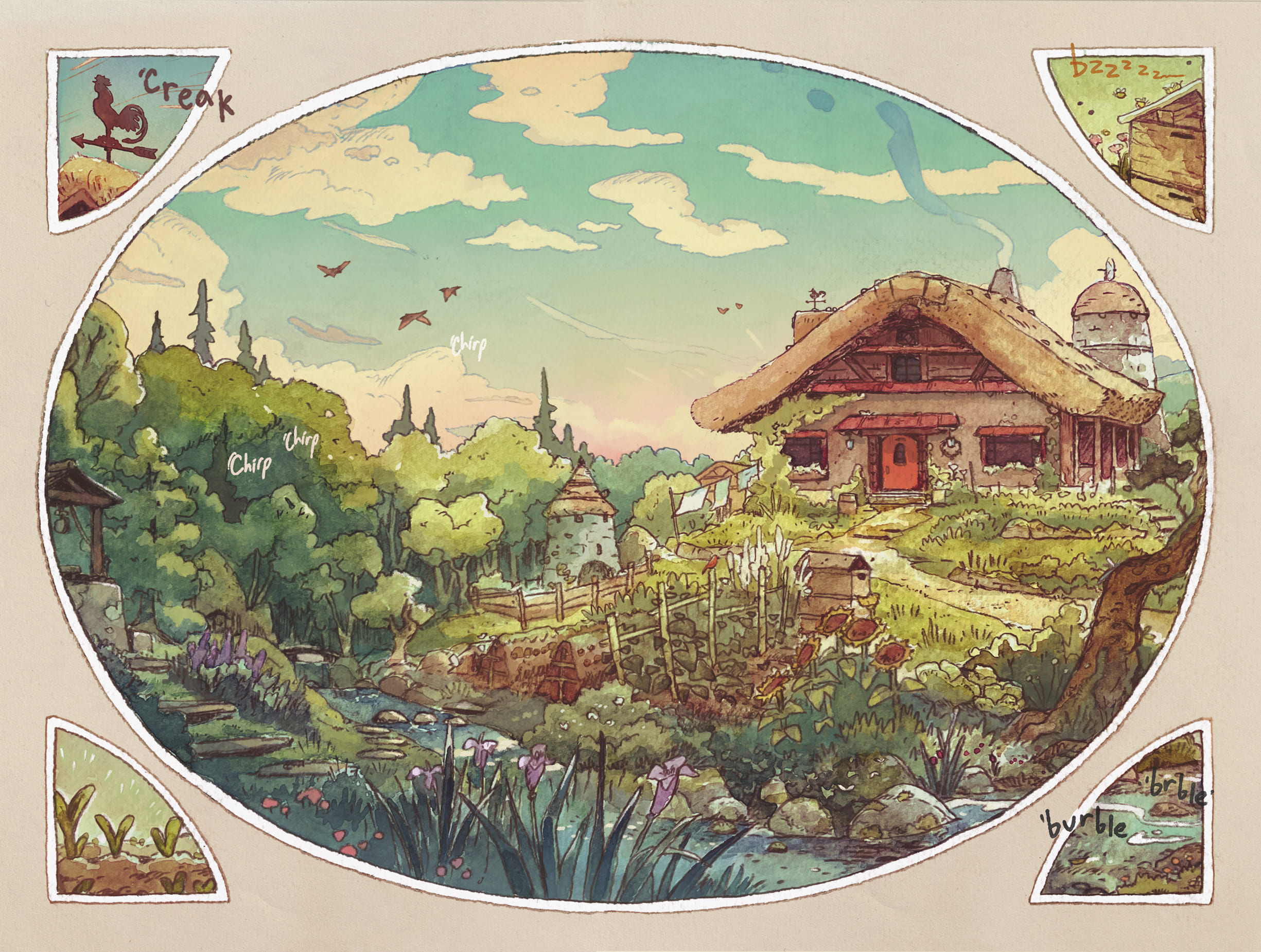
The podcast creates a rich, magical atmosphere. How did you approach the color palette to capture the otherworldly feeling and atmosphere?
Looking at a lot of references, again! I also tried to lean into emotional color and lighting schemes, rather than sticking too firmly to realistic colors and light.
Were there any specific visual references — such as artistic styles or genres — that you kept going back to when illustrating this graphic novel?
Although it’s pretty broad to say, my work is always really inspired by manga and webcomics. Aside from that, the team specifically mentioned in our first meetings that this story was inspired by My Neighbor Totoro, which is one of my favorite films.
When I first listened to the podcast, I felt like it actually has the genuine magic and mystery of a Ghibli film, but doesn’t get so caught up in superficial cliches of coziness that it can’t handle scary or darker moments too. I think that contrast is what truly makes Ghibli films wonderful, and is something so many people can’t balance when they take inspiration from there.
Of course, you’re working with unique source material. How much creative liberty did you take in your art versus relying on the descriptions provided by the cast during the audio experience?
I think the podcast descriptions gave me the perfect springboard to jump off of – just enough information to feel like I had a solid base to explore from.
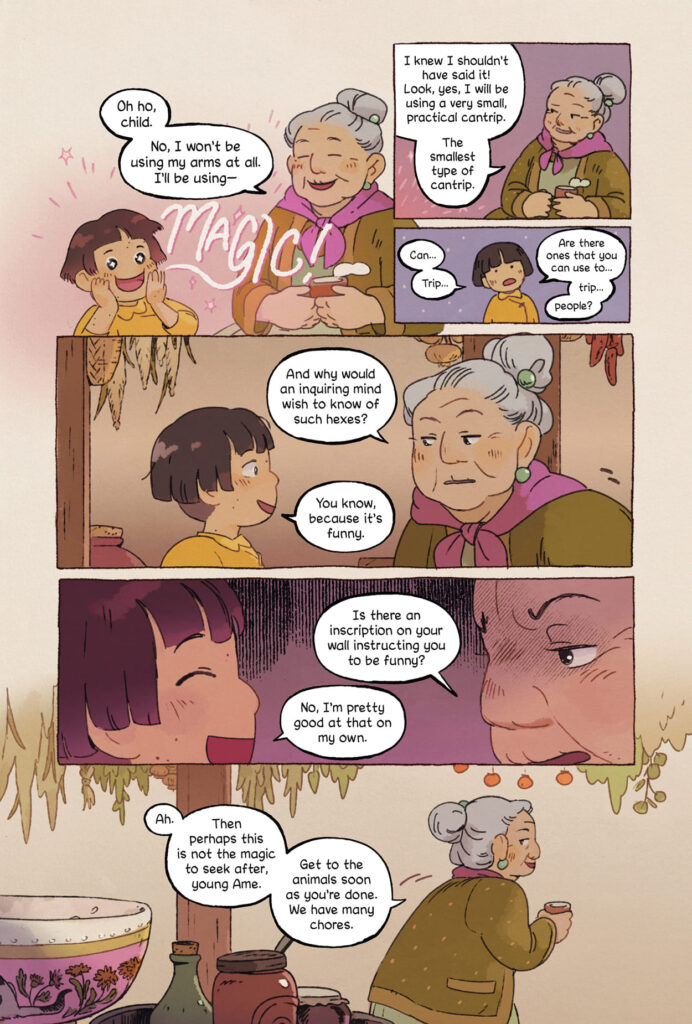
Tell me about working with Jadzia Axelrod — what does that collaboration look like?
Very smooth! When I was approached about this project I didn’t have the time in my schedule to both adapt the podcast to a comic script along with illustrating it, so I asked the editor if we could bring a writer on board. Alex had worked with Jadzia before and knew she was a fan of WBN and she has done such an incredible job of not only adapting but adding to the story of the podcast, and really finessing and perfecting it for the graphic novel version. When I read her scripts, it felt exactly how I remembered the podcast – but when I actually listened back I realized how much she had subtly added or rearranged for the best impact. I feel really lucky I got to work with her here!
To get a little more technical, Jadzia breaks down a chapter by pages and panels, and I work from there to sketch page layouts and compositions. There’s always a little flexibility for edits by either of us, as well as edits throughout by Alex and the WBN team.
If you had to describe the soul of this graphic novel to someone who has never listened to a minute of the podcast, what would you say is the core feeling or theme you wanted the art to capture?
I think the WBN team made a story here that has the nostalgia, beauty, weirdness, and scariness of a fairytale, but feels fresh and new too. I hope my art can help show that.
Visit the official Kickstarter page here.